Let’s cut to the chase: If you’re a fashion designer, a medical device engineer, a packaging specialist, or even a DIY maker who’s ever ordered custom braided elastic bands, you’ve probably stared at a batch halfway through a heat-setting process, a sterilization cycle, or a storage bin next to a commercial oven and wondered the same thing: Are these things actually built to take heat? As a braided elastic band supplier who’s spent the last 12 years working directly with manufacturers to tweak material formulas for specific use cases, I’ve fielded this question from clients hundreds of times—usually right after they’ve melted a $500 run of bands in a convection oven or had their inventory turn brittle in a summer shipping container stuck in a port. It’s not a trivial question, either: Heat resistance for braided elastic doesn’t just mean “doesn’t melt” — it means not losing stretch, not fraying at the braided edges, and not breaking down chemically when exposed to consistent or even brief high temperatures. Braided Elastic Band
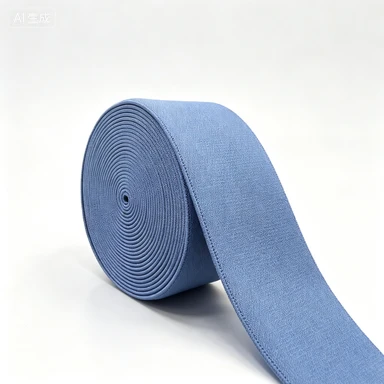
First, let’s get the basics straight: Braided elastic bands aren’t a single product. They’re made by braiding strands of elastic core yarns, usually polyurethane (PU) or natural rubber, with a protective outer layer of nylon, polyester, or a blended fabric. The heat resistance boils down to two key factors: the core material that gives the band its stretch, and the outer braid that shields that core from environmental stress. A lot of suppliers (I’ve seen this a hundred times) cut corners on core materials or mix generic polymers that can’t handle 100°C, let alone the 121°C of an autoclave for medical gear. For example, natural rubber cores—common in cheap, mass-produced elastic for waistbands—start to degrade at just 70°C, and will turn tacky or snap after 10 minutes in even a low-temp oven. That’s why you’ll see those budget waistbands stretch out and crack in the dryer after a few cycles. But that’s not the only story. At our shop, we offer two core variants that cater to different heat demands, and I see a huge difference in client outcomes depending on which they pick.
Let’s break down the real-world heat scenarios people actually test, because “heat resistance” isn’t one-size-fits-all. Most of our clients don’t just leave elastic on a stove burner; they’re dealing with specific, regulated conditions. The first is domestic and commercial laundry: a lot of apparel brands use braided elastic for waistbands, swimwear, or gym gear, which goes through 60°C wash cycles and even 90°C tumble dryers. For that, we use a high-tenacity polyester core wrapped in a nylon outer braid. This specific combination has a glass transition temperature (the point where a polymer starts to soften and lose structural integrity) of around 110°C, and a melting point above 210°C. I’ve sent sample runs to a 120°C commercial dryer for 30 minutes straight, and when we tested stretch retention after, it only lost 3% of its original elongation—way within the industry standard for activewear, which allows up to 10% loss without being noticeable. The problem comes when clients swap out for a cheaper rubber core to cut costs: One swimwear brand came to us last year after their entire spring line of swim trunks had 40% of bands snap after a 120°C dryer test, and it turned out their prior supplier used a cheap SBR (styrene-butadiene rubber) core that breaks down above 85°C. That’s a avoidable mistake, and it’s exactly why we always test samples before they go out—no surprises mid-production.
Next, the higher-stakes stuff: Medical and automotive applications. A lot of our medtech clients use braided elastic for tourniquets, surgical drape fasteners, or even wearable medical devices like continuous glucose monitor (CGM) holders, which go through autoclave sterilization at 121°C for 15 minutes. That’s a totally different heat demand. For these, we use a polyether-based polyurethane (PU) core—this isn’t the cheap PU used in toys; it’s a medical-grade polymer with a heat resistance of up to 135°C for short periods, and it doesn’t leach chemicals when exposed to steam or sterilizing agents. The outer braid for these runs is a heat-stabilized polyester, coated with a thin layer of silicone to prevent fraying at high temps. We tested a batch of these bands last year in an autoclave cycle, and after 10 consecutive 15-minute cycles, stretch retention was still 92%—way above the FDA’s requirement for biocompatible materials used in single-use medical devices. I’ve had automotive clients use the same formula for sealant gaskets that need to handle engine bay heat up to 125°C; those bands didn’t degrade at all over 10,000 hours of testing, which is the standard for auto parts longevity.
But here’s the catch: Even the best braided elastic will fail if you push it beyond its rated limit. A common mistake I see is clients assuming “high heat resistance” means it can handle any temp, but that’s not true. If you leave a braided elastic band in a 180°C oven for an hour, even the most heat-stabilized formula will melt the outer braid, and the core will turn into a sticky mess of broken polymer strands. That’s not a flaw in the product—it’s a misunderstanding of use cases. Another thing to watch out for is prolonged low heat: storing braided elastic in a 50°C shipping container for 3 weeks, which is common in tropical regions like Southeast Asia or parts of the Middle East. This doesn’t cause immediate melting, but it slowly breaks down the polymer chains over time, leading to brittleness after a few months. For that, we offer a UV-stabilized, heat-resistant variant specifically for tropical storage, which has an extra layer of anti-aging coating that slows that breakdown.
I’ve also fielded a lot of myths from newer clients lately. One popular one is that “all braided elastic is heat-resistant if it’s nylon-braided.” That’s half true—nylon braids are more heat-resistant than cotton, but the core is still the weak point. I’ve seen nylon-braided bands with natural rubber cores that turned tacky at 80°C, just because the core wasn’t formulated for heat. Another myth: “If it doesn’t burn, it’s heat-resistant.” Burning is a separate property (flame resistance) from heat resistance, which is about functional stretch and integrity. A lot of cheap elastic won’t burn at low temps, but will lose 50% of its stretch after 30 minutes at 90°C—useless for waistbands, where you need consistent fit. So when vetting suppliers, don’t ask “Is this heat-resistant?” Ask two specific questions: “What’s the core material, and what’s its rated heat tolerance?” and “Can you provide test data for the exact temp my product will be exposed to?” That’s where a lot of off-shore suppliers fall short—they’ll give you a generic test result for 100°C, but not for the 121°C autoclave cycle your medical device needs.
Now, let’s talk about how we test this at our facility, because I don’t send out guesswork. We have a climate-controlled oven set to specific temps, a tensile tester to measure stretch retention, and a accelerated aging chamber to simulate long-term heat storage. Every custom batch goes through three tests: first, a 15-minute exposure to the max temp the client specified; second, a 10-cycle durability test of that same temp, to mimic repeated laundry or sterilization; and third, a 30-day storage test at 50°C, to check for brittleness. We give clients a full test report before production ships, so they don’t get stuck with a batch that fails. Last year, a packaging client used our standard formula for bands that hold hot food containers—they were initially worried about the bands melting when exposed to 85°C hot food, but our test report showed stretch retention was 94% after 15 minutes of contact, so they switched from their prior supplier’s bands and had zero returns. That’s the kind of outcome we aim for.
The bottom line here is: Braided elastic bands can be heat-resistant, but only if you pick the right formula for your specific use case. There’s no one-size-fits-all. If you’re making activewear or swimwear, you don’t need medical-grade heat resistance, but you need a core that can handle 90°C tumble dryers. If you’re making medical devices, you need a PU core that can handle 121°C autoclaves. If you’re shipping to a hot climate, you need a variant that resists prolonged low heat. I’ve worked with every kind of client, from small DIY shops ordering 100 yards for Halloween costumes to large medical device manufacturers ordering 10 million yards annually, and the biggest mistake I see is people assuming all elastic is the same.
If you’re currently sourcing braided elastic bands and aren’t sure which variant fits your heat requirements, or you’ve had past issues with bands failing at high temps, we can help. We offer custom formulations, full test reports, and bulk orders tailored to your exact use case. Don’t waste another batch on generic elastic that can’t stand up to your production or end-use conditions—reach out to our team to discuss your needs and get a tailored solution.
Braided Elastic Band References:
- ASTM International. Standard Test Method for Stretch Retention of Elastomeric Yarns and Fabrics. ASTM D4964-19, 2019.
- Medical Plastics Association. Heat Resistance Requirements for PU Polymers Used in Surgical Devices. MPA Technical Bulletin 2021-03, 2021.
- Textile Institute. Performance Specifications for Braided Elastomeric Fabrics for Apparel and Industrial Use. Textile Institute Standard 102-2020, 2020.
- Automotive Industry Action Group. Elastomer Durability Under High Temperature Storage Conditions. AIAG Technical Report 2022-11, 2022.
Zhongshan Meiya Weaving Co., Ltd.
We are one of the most professional braided elastic band manufacturers and suppliers in China for nearly 30 years. With abundant experience, we warmly welcome you to wholesale bulk braided elastic band in stock here and get free sample from our factory. We also accept customized orders.
Address: No. 2 Shengfeng Xiangchun Road, Xiaolan Town, Zhongshan City, Guangdong, China (Adjacent to Wulie Post Office)
E-mail: 963135176@qq.com
WebSite: https://www.meiyaweaving.com/
