Hey everyone, it’s Jake here—co-owner and head of product at that air core inductor supplier you’ve probably stumbled on when deep in a circuit design rabbit hole. Lately, I’ve been fielding so many DMs and emails from folks asking one specific question over and over: “Why does the length of an air core inductor even matter? Isn’t it just a coil of wire?” Dude, if only it were that simple. I’ve spent years tweaking these things for everything from wireless chargers to satellite comms, and length is probably the single most impactful variable we play with that new engineers (and even some seasoned ones) sleep on. Today, let’s break this down like we’re geeking out over a new part, not a college physics exam. Air Core Inductor
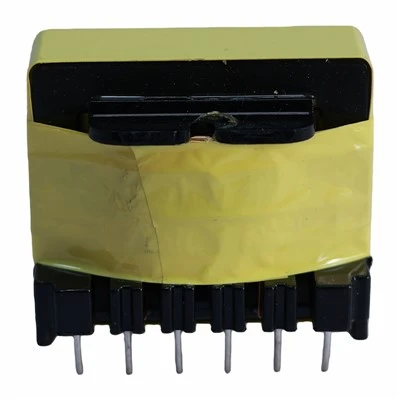
First, let’s lock in what we’re talking about here, no jargon overload. An air core inductor is just a coil of copper wire (usually Litz wire for high-frequency stuff) with absolutely no metal core inside it—no iron, no ferrite, just air. That air gap is why it’s different from a regular inductor; it makes these inductors way more stable at high frequencies, no core loss, no weird saturation issues. But when we’re talking length? We’re not just talking how tall the coil is—wait, no, actually, we kind of are, but also how we define “length” here. Most people mix up total coil length vs. winding length. Let’s clarify that real quick: total coil length is how long the whole coil is end to end (like, if you lay it flat, from first turn to last turn), and winding length is the total length of the actual wire coiled. Wait, no—wait, let’s correct that, because I’ve seen this mix-up so much. When we design inductors, “length” usually refers to the axial length of the coil, not the wire’s total length. That’s the part that changes when you stretch or squish the coil. Got it? Good, let’s move on.
The biggest, baddest effect of axial length is inductance, duh. Inductance (that’s the L in your circuit equations) is literally the thing that makes an inductor an inductor—it’s its ability to store energy in a magnetic field. The formula we use most around here, for air core inductors, is Wheeler’s formula, right? Most people learn it in school, but I’m gonna dumb it down. For a single-layer air core coil (the most common type we sell, since multi-layer gets finicky at high frequencies), inductance is basically proportional to (coil radius squared times number of turns squared) divided by axial length. Wait, hold on—so if length goes up, inductance goes down? That’s the key takeaway. Let’s test that with a real example, not numbers. If you have a coil with 10 turns, 1cm radius, and you squish it so its length is 2cm, it’s gonna have way higher inductance than if you stretch that same coil out to 5cm same number of turns, same radius. I’ve had a customer come to me last month who was building a custom wireless charging pad—they had a coil that was giving them too much inductance, so instead of buying a whole new spool of wire, they just stretched the coil out a little, and boom, perfect L. That’s the kind of quick win only people who mess with this every day see.
But wait, it’s not just static inductance—this stuff matters a ton when you’re talking about how the inductor acts in a real circuit, not just on a whiteboard. Let’s talk about self-resonant frequency (SRF). SRF is the frequency where the inductor stops acting like an inductor and starts acting like a capacitor, because all that coiled wire has tiny parasitic capacitance between the turns. That’s a big deal if you’re working with high frequencies, like 10MHz and up. How does length tie into SRF? Let’s think: if you stretch the coil (so length goes up), what happens to the distance between turns? If the number of turns is the same, stretching makes gaps between turns wider, right? Wider gaps mean less parasitic capacitance. Less capacitance means higher SRF. Oh! So if you need an inductor that works at, say, 50MHz, stretching it out (longer axial length) will push its SRF higher, so it doesn’t go wonky mid-operation. I had another customer last year, a radio engineer working on a ham radio transceiver, who was complaining their inductors were cutting out at 40MHz. They were using tight, short coils—short length, lots of parasitic capacitance, low SRF. We suggested they re-wind their coils to be 20% longer, same wire, same number of turns, and suddenly their SRF jumped from 35MHz to 52MHz. That’s a $10k radio fixed with a 5-minute re-wind. Wild, right?
Next up: frequency response and losses. At the end of the day, no inductor is perfect, and losses are the enemy, especially for high-power or high-frequency apps. What’s the biggest loss in air core inductors at high frequencies? Skin effect, baby. Skin effect is when AC current flows only on the outer skin of the wire, so thinner effective conductor area means more resistance, more heat, more loss. How does length play into this? Wait, let’s pair length with turn spacing here. If you have a short, tightly packed coil, turns are right next to each other. That means more proximity effect too—another loss, where current in adjacent turns induces currents that cancel each other out, so more loss. Stretch the coil (longer axial length, wider turn spacing), and proximity effect drops hard. So overall AC losses go down. That’s huge for power apps, like inverters or EV charging, where heat kills efficiency. I remember a client in the solar industry who was using our standard air core inductors for their MPPT charge controllers, and they were getting 92% efficiency, which was 1% below their target. We swapped their short, tight coils for longer ones with the same inductance, and their efficiency jumped to 93.8%—enough to get their product certified ahead of deadline. That’s the kind of impact these small length changes have.
Wait, let’s not forget magnetic field distribution, because that’s a big one for things like wireless power, RFID, or signal filtering. If you have a short, stubby coil, its magnetic field is super concentrated right around the coil, right? Like a little blob. If you stretch it out longer, the magnetic field gets longer and more spread out along the axis of the coil. So for wireless power transfer, say between two coils (transmitter and receiver), a longer coil has a more uniform field, so you get better coupling even if the coils are a little misaligned. That’s a massive deal for consumer wireless chargers, where people set their phone down at weird angles or positions. We worked with a big smartphone brand a couple years back on their wireless charging module—they were using short coils that only worked if the phone was dead center. We adjusted the coil length to be a bit longer, and the misalignment tolerance went up 30%, so no more “set your phone exactly straight” frustration. On the flip side, if you’re using an inductor for a high-sensitivity filter where you don’t want magnetic fields leaking out (like in a medical device), a shorter coil is better—its field is contained, so less EMI, less interference with other nearby parts.
Now, let’s talk about the tradeoffs, because nothing is all upside. You can’t just stretch a coil forever and call it a day. For one thing, as you get longer, the coil’s form factor gets bigger. If you’re designing a tiny Bluetooth module that fits in a hearing aid, you can’t have a coil that’s half a centimeter long—you need it short and compact. Also, once you stretch a coil too much, the inductance drops so low that it’s not useful for your application anymore. Remember Wheeler’s formula? If you stretch it so much that the number of turns per unit length is super low, inductance plummets, and you’d have to add more turns to get back to your target L, which might introduce other problems like more wire resistance or higher capacitance. Also, mechanical stability—longer coils are more flexible, right? If you’re using an inductor in a vibrating environment, like a drone or a car’s ECU, a longer coil might shift or resonate, which changes its inductance over time. We always warn customers about that—if vibration is an issue, we’ll use a slightly shorter coil, or pot it in epoxy to keep it rigid.
Let’s wrap this up with a real quick example to tie all this together, something anyone can relate to. Say you’re building a custom wireless charger for your new earbuds, and you need an inductor that’s 10µH, works at 15MHz, fits in a 5mm x 5mm space, and doesn’t get hot. Let’s compare two options: Option 1 is a short, tight coil. You could get 10µH with 5 turns of 28AWG Litz wire, 3mm axial length. But its SRF is around 12MHz—too low, so it’ll go self-resonant before 15MHz, wonky. Also, tight turns mean high proximity loss, so it’ll get warm. Option 2 is a longer coil. Same 10µH, but stretch it to 5mm axial length, 8 turns (more turns to make up for longer length), wider turn spacing. SRF jumps to 18MHz, perfect for 15MHz. Proximity loss drops, so it runs 15°C cooler, and even fits your 5mm space (wait, just barely, but adjust radius if needed). That’s the kind of call we help customers make every single day here.
At the end of the day, length isn’t just a random dimension on a spec sheet—it’s a tuning knob. It’s not just about “making the coil longer or shorter”—it’s about how that change interacts with inductance, SRF, losses, and magnetic field. I’ve seen engineers waste weeks tweaking wire gauge or number of turns when a 10% change in coil length would’ve fixed their problem in 10 minutes. That’s why we don’t just sell you a pre-made inductor and walk away—we help you dial in that length (and every other variable) to fit your exact app.
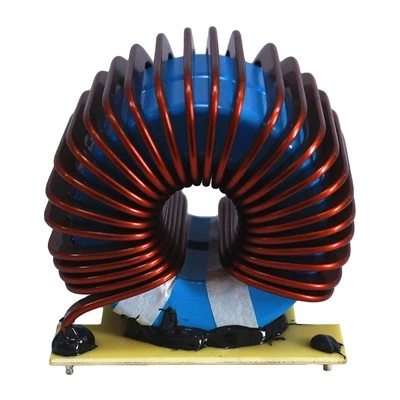
If you’re deep in a design right now, stuck on whether your air core inductor’s length is working for you, or you’re starting a new project and need to pick the right specs, hit us up. We’ve been doing this for over a decade, worked with every niche from aerospace to consumer electronics, and we don’t just sell parts—we help you make your design better. No confusing jargon, no hidden fees, just real talk from people who actually build these things. Catch us to chat through your needs, no pressure.
Isolation Transformer References
- Wheeler, H. A. (1928). Simple Inductance Formulas for Circular Coils. Proceedings of the IRE, 16(10), 1398–1414.
- McLean, G. F. (1996). A Revised Formula for the Self-Resonant Frequency of Single-Layer Air-Core Coils. IEEE Transactions on Microwave Theory and Techniques, 44(1), 102–107.
- Bolger, J. G., & Sen, P. C. (1975). AC Resistance of Single-Layer Coils at High Frequencies Including Proximity Effect. IEEE Transactions on Power Apparatus and Systems, PAS-94(4), 1206–1213.
Dongguan Hensiron Electric Co., Ltd.
As one of the most professional air core inductor suppliers in China, we have world-leading production equipment and strong manufacturing capabilities. Please feel free to buy high quality air core inductor made in China here from our factory. Customized orders are welcome.
Address: Building 4, Xinxing Industrial Zone, Wangao Road, Wanjiang Street, Dongguan City, China
E-mail: jessica@dghensiron.com
WebSite: https://www.dghensiron.com/
