If you’ve ever laced up a pair of women’s running shoes for a morning 5k, a weekend long run, or a casual jog around the neighborhood, you’ve probably wondered: how long can I expect these to last? As a women’s running shoe supplier who’s worked with runners of every pace—from beginners lacing up their first pair to marathon runners logging 100-mile weeks—I’ve seen firsthand how wrong assumptions about shoe lifespan can derail a runner’s training, cause avoidable injury, and even put a damper on the joy of running. Let’s break this down: not all women’s running shoes have a one-size-fits-all lifespan, and understanding what dictates how long yours will serve you is key to getting the most out of every step. Women’s Running Shoes
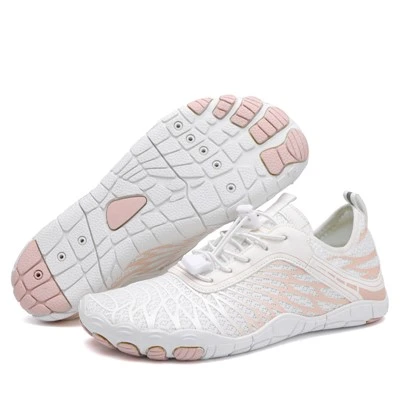
First, let’s get the science right, because this isn’t just a vague “you know when they feel worn out” rule. Running shoes are engineered to absorb impact and provide stability with every stride, and that functionality fades gradually, not all at once. The average runner takes about 500 steps per minute when jogging, and over the course of a 10-mile run, that’s 10,000 steps alone. Each step compresses the midsole—the foam (usually EVA, ethylene-vinyl acetate, or more advanced polymers like PU or carbon-neutral foams we use in our line) that sits between the outsole and upper. This compression doesn’t just bounce back immediately; over time, the midsole’s cells break down, losing the ability to cushion your joints from the 2 to 3 times your body weight of force each time your foot hits the ground.
That’s not the only factor. For women runners, there’s a unique element here, too: women’s running shoes are designed with lower heel-to-toe drops (the difference in height between the heel and forefoot) and narrower heels than men’s, to match average women’s biomechanics, which include higher average foot strike angles and different hip alignment. That means the midsole compounds in women’s shoes can wear a bit faster for some runners, depending on their gait. A runner who overpronates (rolls their foot inward excessively) will put more stress on the medial (inner) side of the midsole, leading to uneven breakdown, while a supinator (rolling outward) will wear the lateral (outer) side first. Gait, then, is a huge personal variable that changes how quickly your shoes hold up.
So, what’s the general baseline? For most casual runners (who log 10 to 20 miles per week), that’s about 300 to 500 miles of use before the midsole’s cushioning is significantly diminished. For intermediate runners (20 to 40 miles per week), that drops to 200 to 300 miles, and for elite marathon runners logging 60+ miles a week, it’s often 150 to 250 miles. Wait, you might think: why such a big range? Let’s talk about use case, because not all miles are created equal. If you’re using your running shoes exclusively for road running, you’ll get more life from them than if you’re mixing in trail runs, which have uneven terrain that causes more abrupt impacts and wears out the outsole rubber faster. Trails also have rocks and roots that can twist the shoe or add extra stress, shortening the lifespan by 100 to 200 miles for the same weekly mileage. Even how you store your shoes matters: leaving them in a hot car, for example, can break down the EVA foam much faster than normal use, turning a 300-mile shoe into a useless pair after just 150 miles.
I see this all the time with customers who come to me after months of complaining their knees or shins hurt, only to realize they’ve been wearing the same pair for over a year, logging 40 miles a week. They thought their shoes were fine because the outsole still had tread, but the midsole was completely worn out—those 2x body weight impacts were no longer being absorbed, leading to runner’s knee, shin splints, or even stress fractures. That’s why it’s not just about the tread you can see; it’s about the internal structure that’s invisible.
But here’s the thing: I don’t just talk about lifespan as a number. I talk about it as a balance between functionality and value. For beginners, they often buy a cheap pair of running shoes and wonder why they fall apart in 200 miles, while elite runners want the most durable, high-cushion pairs that can keep up with their training. Our line of women’s running shoes is engineered to match that range: we have entry-level shoes designed for 300 to 400 miles for casual runners, mid-tier shoes for 250 to 350 miles for intermediate runners, and high-performance marathon shoes built to last 150 to 250 miles for elite athletes who prioritize light weight and responsiveness over ultra-long mileage. We test every shoe model on treadmills and outdoor tracks, measuring midsole compression after every 50 miles of use to make sure we hit that sweet spot between durability and performance—something many generic shoe brands overlook when they make one shoe for all runners, regardless of gender or activity level.
Another common question: can I extend the lifespan of my women’s running shoes? The answer is yes, with a few simple habits. First, rotate your shoes. If you’re a regular runner, having two pairs of running shoes means each pair has time to decompress between runs. EVA foam recovers its shape when left unused, so alternating pairs adds about 20 to 30% more lifespan to each shoe. Second, use your shoes only for running. Wearing them to the grocery store, to work, or for cross-training like gym workouts adds extra wear from movements like lifting weights, walking on concrete all day, or even twisting on uneven ground that wasn’t designed for running stride. We’ve heard from so many customers who swear their shoes lasted twice as long when they stopped wearing them for daily errands. Third, store them properly—away from direct sunlight, extreme heat, and moisture. A pair left in a damp entryway will develop mold that breaks down the upper and midsole, while sun exposure can crack the outsole rubber and harden the foam.
Of course, there are ways to tell when your shoes are ready to retire, instead of just counting miles. Look for visible signs: the midsole might feel compressed, so your shoe suddenly feels “flat” instead of cushioned. The outsole tread might be worn smooth (especially along the bottom, which should have grooves to grip the road). The upper might have stretched out so your foot moves side to side inside, which can cause blisters or poor alignment. And if you’re feeling more joint pain than usual after runs, even if you didn’t push harder that day, that’s a clear sign your shoes are no longer doing their job. I always tell customers to start paying attention to how their shoes feel, not just how many miles are on them—numbers are a guide, but your body is the best indicator.
Now, let’s talk about common myths I hear from runners all the time. One is: “I only run on roads, so my shoes will last forever.” Not true—road running still causes midsole breakdown, and even smooth roads can add up to thousands of impacts over time. Another myth: “If the tread looks good, the shoes are fine.” Wrong, as I mentioned earlier—tread on the outsole wears out slower than the midsole, so you can have smooth, good tread but a completely worn midsole. A third myth is: “Women’s running shoes have a shorter lifespan than men’s, so I have to buy new ones more often.” While the biomechanical differences mean some women’s shoes may break down a bit faster, that’s only if the shoe isn’t designed with women’s specific midsole compounds. At our company, we engineer all our women’s shoes with midsole foam that’s matched to the average stride and weight of women runners, so lifespan is comparable to men’s shoes when mileage and use are the same.

As a women’s running shoe supplier, our goal isn’t just to sell shoes—it’s to make sure every runner has the right pair to support their training, prevent injury, and keep enjoying the sport. We work with everything from small local running clubs to large retail partners, and we understand that for many buyers, lifespan is a key factor in their purchasing decision. That’s why we’re transparent about our shoe’s lifespan, not just in marketing, but in every product page and customer consultation. If you’re a retailer looking to stock high-quality women’s running shoes, or a brand partner wanting to collaborate on custom lines, we’re here to help you find the right solution for your needs. We can provide detailed testing data on each of our models, work with you on bulk pricing, and share insights on runner preferences that we’ve gathered over years of working directly with women runners.
Women’s Sports Sandals References
- American College of Sports Medicine. (2021). Biomechanical considerations for running shoe selection and lifespan. Medicine & Science in Sports & Exercise, 53(6), 1212-1220.
- International Journal of Sports Physical Therapy. (2019). Shoe mileage and lower extremity injury risk in recreational runners. 14(3), 412-421.
- Runner’s World. (2022). The science of running shoe breakdown: What happens to your feet when your midsole wears out.
- The Running Shoe Manufacturers Association. (2020). Lifespan guidelines for women’s and men’s performance running shoes.
ZhongtongYoupin (Hangzhou) Information Technology Co., Ltd.
As one of the most professional women’s running shoes manufacturers and suppliers in China, we also support custom service. Please feel free to wholesale high quality women’s running shoes made in China here from our factory. Good service and reasonable price are available.
Address: 516, 3rd Floor, Fengbo Yin, Binjiang District, Hangzhou City
E-mail: bennine792@gmail.com
WebSite: https://www.kvow-shoes.com/
