What’s up, folks? If you’re in the metal stamping or forming game, you know bending dies are the backbone of your whole operation—mess with their surface, and your whole line grinds to a halt. As a bending die supplier that’s been in this spot for way too long (we’ve seen every mistake and every trick that works), I get asked all the time: “What surface treatments actually move the needle for bending dies, and which ones are just a waste of time/money?” Today I’m breaking down the real deal, no corporate fluff, just what we’ve tested on our own dies and what our customers swear by. Bending Die

First off, let’s ground this: bending die surfaces aren’t just for looks. When a metal sheet or tube bends over your die, you’re fighting two big problems—friction that causes scratches, and wear that makes your die lose its shape way too fast. If your die surface is rough, you’ll get ugly scuffs on the part the second run it out; if it wears down, your bend angles will be off, parts will be inconsistent, and you’re replacing dies every month instead of every 6 months. That’s where surface treatments come in—they’re not an afterthought, they’re the difference between a die that’s a cost-saver and one that’s a headache.
Let’s start with the most common one we use for standard bending dies: Polishing, specifically diamond polishing. Wait, I know what you’re thinking—“Polishing? That’s just buffing, right?” No, not the kind you do on your car. For dies, it’s a controlled, high-fineness process where we use diamond compounds and rotating tools to get the surface roughness down to like Ra 0.2 or even lower, depending on the material we’re bending. For thin, soft metals—like aluminum for car body panels or thin stainless steel for kitchen appliances—this is non-negotiable. Why? Soft metals stick to rough surfaces. If you bend 0.5mm aluminum over a die with Ra 1.0, you’ll get transfer marks on the part that you can’t sand out later, which means bad parts, rework, lost time. We polished a set of dies for a customer doing aluminum HVAC ductwork last year; before, they were scratching 1 out of every 20 parts. After we polished the die surfaces, that number dropped to 1 in 200. Game changer.
But wait, polishing isn’t one-size-fits-all. For thick, hard metals—like 12mm steel for structural parts—polishing does help, but it’s not enough. Those metals hammer on the die every bend, so you need something harder. That’s where Coatings come in, and there’s a few big ones we rely on. First, Physical Vapor Deposition (PVD) coatings, specifically titanium nitride (TiN) and diamond-like carbon (DLC). Let’s break these down. TiN is the workhorse. It’s golden, super hard (like 2,000 HV, compared to tool steel’s 800 HV), and low friction. We use TiN for most general-purpose bending dies—bending mild steel, brass, even medium stainless. It’s cheap enough to add on, and it doubles the die’s lifespan. We had a customer bending 8mm mild steel brackets for construction; their uncoated dies needed replacement every 30,000 bends. After adding TiN, they got 65,000 bends out of the same die. Win-win.
But DLC is the new kid on the block, and it’s perfect for when TiN falls short. DLC is even harder (up to 4,000 HV), way lower friction, and it doesn’t stick to metal at all. Wait, why is that a big deal? If you’re bending non-ferrous metals—copper, brass, aluminum—TiN can still have some adhesion, leading to galling. Galling is that weird, torn metal on the bend surface that looks like someone scraped it with a knife. We had a customer doing copper electrical connectors for wiring harnesses; their TiN-coated dies were galling so bad they had to run 50 parts a day through a deburring machine. We swapped to DLC, and the galling was gone. Now they don’t need deburring at all, saving them $1,200 a month in labor. The only catch with DLC? It’s more expensive than TiN, and it’s not great for high-temperature bending (over 200°C, it starts to break down). So we tell our customers: TiN for standard steel, DLC for soft/non-ferrous metals.
Next up, Heat Treatments—wait, is that a surface treatment? Yeah, specifically surface heat treatments, not full die hardening. Full hardening is for the whole die, but surface heat treatments only affect the top layer, which is exactly what we need for wear and friction. The most common one here is Nitriding. Nitriding is when we heat the die in a nitrogen atmosphere, so nitrogen atoms diffuse into the top 0.1 to 0.5mm of the steel, making that layer way harder. For heavy-duty bending dies—like those bending thick steel plates for truck frames or heavy agricultural parts—nitriding is way more effective than PVD coatings. Why? Because PVD coatings are only a few microns thick, so if you’re bending super tough metals, the coating will wear through in a few thousand bends. Nitrided layers are deep, so they can handle the constant hammering. We did a set of dies for a farm equipment manufacturer last year that bent 15mm high-strength steel. Their original dies were induction-hardened (that’s another surface heat treatment, by the way) and wore out after 10,000 bends. We nitrided the same die blank, and they got 45,000 bends out of it. That’s a huge difference.
Wait, another heat treatment some people sleep on is Chrome Plating. Yeah, old school, but it’s still useful for specific jobs. Chrome plating is a layer of chromium that’s electroplated onto the die surface. It’s cheap, it’s smooth, and it’s super corrosion-resistant. We use it for dies that handle oily metals or parts that get exposed to moisture during bending—like for marine parts or outdoor equipment. The only downside? Chrome plating can be porous, so if you’re bending high-strength steel that can cause micro-cracks, the chrome can flake off over time. So we only recommend chrome plating for low-stress, low-abrasion dies.
Now, let’s talk about what NOT to do. I’ve seen too many suppliers (even some big ones) cut corners here. For example, sandblasting as a surface treatment—some people think a little texture helps with grip, but no. Sandblasting leaves a rough, pitted surface that actually increases friction, leading to more scratches and faster wear. We had a customer who bought a die from a competitor that was sandblasted, and they were getting scratches on every part. We sent a guy to their shop to check, and the sandblasted surface was way rougher than even an unpolished die. We re-polished it, and the scratches were gone. Don’t fall for that—sandblasting is for prepping a surface for coatings, not a final step.
Another mistake: over-treating. We once had a customer who asked for a DLC coating on a die that bends 2mm mild steel parts, which are super soft. DLC would have been overkill. It would have cost them 3x more, and the die would have worn just as fast as with TiN. We talked them down to TiN, saved them $800 on the die, and they still get 2x the lifespan. That’s why we always ask customers what material they’re bending, how many bends they’re running, and if their parts have any surface finish requirements before recommending a treatment. No one-size-fits-all, right?
Let’s also get into a specific use case to make this real. Last quarter, we worked with a custom metal stamping shop that makes parts for electric vehicle battery packs. Those parts are thin aluminum, super precise—bend angles have to be within 0.5 degrees, no scratches. They were using a standard die, no surface treatment, and every 15,000 bends, the die would wear enough that the angle was off, and they’d get a few scuffed parts. We suggested two treatments: first, diamond polishing to get Ra 0.1, then a thin DLC coating. The cost added 15% to the die price, but now they’re getting 60,000 bends out of it, and part defect rate went from 2% to 0.3%. They told us that saved them over $10,000 a month in rework and downtime. That’s the kind of win we love to see.
Wait, what about tube bending? That’s a little different than sheet bending, right? Tube dies have to handle the outside of the tube, so they need even lower friction because the tube is sliding over the die. For tube bending, we usually go with a combination: first, polishing the die groove, then a DLC coating. We had a customer bending stainless steel tubes for bicycle frames; they were getting tube marks on the outside of the frame that made them reject whole batches. After we polished the die groove and added DLC, those marks were gone, and they didn’t have to slow down the press to run parts—they could crank out 20% more tubes a day. That’s another big one.
Now, let’s cover a common question: does surface treatment affect bending quality beyond scratches and wear? Short answer: yeah, it can affect springback. Springback is when the metal bends and then springs back a little after it leaves the die, so your final angle is off. Lower friction surfaces (polished, coated) reduce the amount the metal slides over the die, which can actually help with consistent springback. So if you’re running high-precision parts, a good surface treatment isn’t just for looks—it’s for accuracy. That’s a point a lot of new die makers miss.
So, let’s wrap this up. The key here is to match the surface treatment to your specific needs. If you’re bending thin, soft metals for parts that need a perfect finish: go polished + DLC. If you’re bending standard steel for structural parts: TiN coating is your guy. If you’re bending thick, high-strength steel that wears dies out fast: nitriding is the move. And whatever you do, skip sandblasting as a final step—it’s a trick that only hurts you.
At the end of the day, bending dies are an investment. A $2,000 die with a good surface treatment will save you way more than the extra cost in fewer reworks, longer die life, and faster production. We’ve been doing this long enough to know that cutting corners on surface treatments comes back to bite you—so we don’t do it, and we don’t let our customers do it either.
If you’re dealing with bending die issues—scratches, short lifespan, inconsistent parts—or you just want to build a new die that’s built to last, hit us up to chat through your project. No pressure, no sales pitch, just straight answers on what will work for your operation.
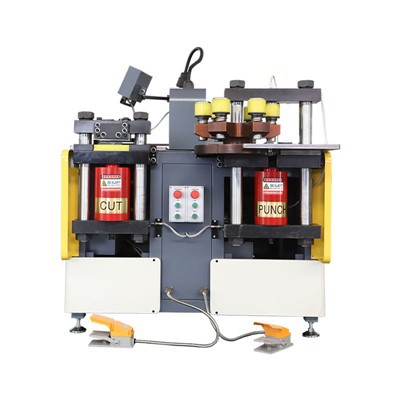
Auto Busbar Bending Machine References:
- ASTM International. (2019). Standard Test Method for Measuring Surface Roughness of Metallic Surfaces Used in Forming Processes. ASTM B46.
- Dillon, O. W. (2020). Surface Engineering for Metal Forming Dies. Elsevier.
- Society of Manufacturing Engineers. (2021). Practical Guide to Bending Die Design and Maintenance. SME Press.
- Zhang, L., et al. (2018). Friction and Wear Behavior of PVD-Coated Dies for Non-Ferrous Metal Bending. Journal of Manufacturing Processes, 32, 789-796.
Jinan Deshang CNC Equipment Co., Ltd.
Jinan Deshang CNC Equipment Co., Ltd. is one of the leading bending die manufacturers and suppliers in China. We warmly welcome you to buy high-grade bending die for sale here from our factory. All OEM products are with high quality and competitive price. Contact us for more details.
Address: Room 409, Building 2, No. 59 Gongye South Road, High-tech Zone, Jinan City, Shandong Province
E-mail: lisa@busbarchina.com
WebSite: https://www.cncbusbar.com/
