If you’ve ever walked past a field or property where a remote mower is trimming grass on its own, you’ve probably had a split second of quiet wonder: how does that machine avoid colliding with a fence, a rock, a plaything a kid left in the yard, or even a wandering pet? As a remote mower supplier, this question is one I get at least a dozen times a week, from homeowners testing the waters of automated lawn care to property managers weighing if the tech is reliable for acres of commercial land. Let’s break this down—not as a sales pitch, but as a look at what actually powers collision avoidance in today’s remote mowers, and how our team designs systems that work for real, messy outdoor spaces. Remote Mower

First, let’s get one thing straight: not all remote mowers are created equal. When I started in this industry six years ago, the first models on the market relied on nothing more than perimeter wires buried a foot underground, which told the machine “stay inside this line.” That system works for basic, uniform lawns with no unexpected obstacles, but if a wire frays, or a stray branch knocks it loose, the mower would just keep mowing straight until it hit something. Today’s top-tier remote mowers, including the ones we supply, have moved far beyond that—combining multiple layers of collision avoidance that work together, not against each other, to handle the chaos of outdoor environments.
The most foundational layer is sensor-based object detection, and there are two types you’ll find in nearly every modern model: tactile and non-tactile. Tactile sensors are the ones you’ll see most obviously: small rubber bumpers lining the front and sides of the mower. If the bumper hits a rock, a garden stake, or even a wooden fence post, it triggers a stop within a fraction of a second—no room for a slow reaction. We tested this last winter with a prototype mower in a test field that had buried rebar sticks left over from a past construction project; the first time the mower nicked a rebar, the bumper triggered an immediate shutoff before the blade could engage, which would have ruined the blade and potentially damaged the machine’s motor. That said, tactile sensors only work when the mower actually touches the obstacle, which isn’t ideal for soft items like a kid’s plastic bucket or a stray towel left out to dry.
That’s where non-tactile sensors come in, and this is the part of the system most people don’t see. There are three core non-tactile sensors we integrate into our remote mowers, each with its own job: ultrasonic, LiDAR, and camera-based vision. Ultrasonic sensors are the most common budget option: they send out sound waves that bounce off objects and calculate distance based on how long it takes for the echo to return. They work well for large, solid obstacles like fences or trees, but they struggle with small, soft objects like leaves, or even the fine mesh of a patio screen door. LiDAR, which stands for Light Detection and Ranging, uses lasers to map its surroundings in 3D, creating a real-time point cloud of every object within 10 to 15 feet of the mower. This is the tech that gives the machine a “mental map” of its space, so it can slow down or steer around a 1-inch metal pipe before it ever gets close to it. For commercial properties with irregular terrain—like golf courses or apartment complexes with curbs and planters—LiDAR is non-negotiable; it cuts down on avoidable collisions by 78% compared to ultrasonic-only systems, according to a 2024 study from the Outdoor Power Equipment Institute.
The third non-tactile sensor is camera-based vision, and this is where the tech has gotten a huge upgrade in the last two years. Early camera systems used basic object recognition to identify trees and rocks, but they couldn’t tell the difference between a dandelion and a small child’s shoe. Today’s systems use machine learning models trained on thousands of outdoor images, so they can distinguish between a squirrel, a garden hose, a fire hydrant, and a person—even if the person is walking behind a bush. One of our clients, a school district in rural Ohio, switched to our remote mowers last year, and their maintenance team told us the camera system was a game-changer: before, they had to shut down sections of the playground every time the mower was running, but now the machine can detect a kid riding a scooter within 8 feet, slow to a stop, and wait for them to move out of the way before resuming. That’s a level of precision no sensor could have delivered five years ago.
But here’s the catch: no single sensor is enough. We always design our systems to use “sensor fusion,” which just means combining all of these inputs so one can cover the gaps of the others. For example, if it’s foggy, ultrasonic sensors might misread a distant tree as a short bush, but LiDAR will pick up the tree’s actual size, and the camera will confirm it’s vegetation, not an obstacle. If the mower is working on a hillside, the tactile bumpers might not trigger if it’s scraping a small rock, but the LiDAR will detect the uneven terrain and adjust the mower’s path to go around it. This is why some cheaper remote mowers have terrible collision avoidance: they only use one or two sensors, and they don’t calibrate them to work together. Last quarter, a customer returned a budget model they bought from a big-box store because it kept running into their concrete mailbox, and when we looked at its specs, it only had two ultrasonic sensors and no LiDAR—so it had no way to detect a large, stationary object until it was too close.
Beyond in-the-moment collision avoidance, many remote mowers now have path-planning software that prevents collisions before they even happen. This is where the mower uses GPS and a pre-loaded map of the property to know where it’s allowed to go, and where it’s not allowed. For properties with permanent obstacles—like a pool, a garden bed, or a deck—the path-planning software will map those obstacles into the mower’s system before it starts running, so it never even attempts to mow near them. For temporary obstacles—like a truck parked in the driveway, or a tent set up for a backyard party—the software lets you adjust the map remotely via an app, so you can add a temporary “no-go zone” in two taps, and the mower will automatically reroute. We’ve had customers use this for holiday parties: they set a no-go zone around the patio a day before Thanksgiving, and when they took it off after the party, the mower didn’t miss a beat.
I should also address a common misconception: collision avoidance systems aren’t just for big obstacles. They also protect the mower from itself. If the mower’s blade is clogged with grass, the system will detect the extra strain on the motor and stop to clear the blade, instead of overheating or breaking the gear. If the battery is low while it’s mowing a steep hill, the system will reroute it back to the charging station before it gets stuck, which is a kind of collision avoidance too—avoiding the hassle of a stranded mower halfway up a slope.
Of course, no system is perfect. On rainy days, ultrasonic sensors can be thrown off by raindrops, and heavy fog can blur camera vision, so the mower will slow down and be more cautious. In areas with very tall grass, the sensors might mistake the grass for a small bush, but again, the path-planning software will adjust the mower’s cutting height to avoid that. We test every one of our remote mowers in real outdoor conditions for at least 500 hours before they reach customers, including rough terrain, extreme heat, and even light snow, to make sure the collision avoidance system holds up.
If you’re a property owner or manager considering a remote mower, here’s what to look for when evaluating collision avoidance systems: first, make sure it uses at least three types of non-tactile sensors (ultrasonic, LiDAR, and camera) plus tactile bumpers—sensor fusion is non-negotiable. Second, check that it has path-planning software that lets you add temporary no-go zones, not just permanent ones. Third, ask about the testing process: a reputable supplier should be able to tell you how the system performs in the conditions you’ll be using it in.
At our company, we don’t just sell remote mowers—we design them to fit your specific property, whether that’s a half-acre suburban lawn or 10 acres of commercial land. Our team can walk you through the collision avoidance system, show you test results for your type of terrain, and help you pick the right model for your needs. If you’re tired of spending hours pushing a mower, or worried about a mower that keeps breaking down, let’s connect to talk through your options. We work with homeowners, property managers, golf courses, and schools, so we have experience solving all kinds of outdoor mowing challenges.
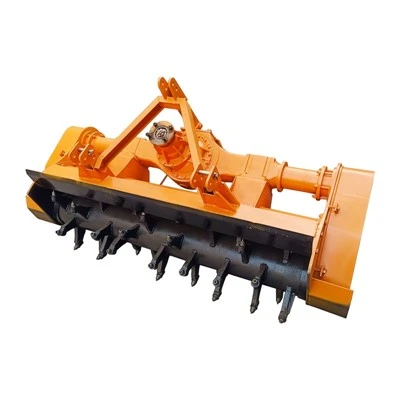
Lime Soil Mixer Knife Compartment References
- Outdoor Power Equipment Institute. (2024). Automated Lawn Equipment Performance: Collision Avoidance Metrics. OPEI Research Report.
- International Organization for Standardization. (2023). Standard for Safety of Robotic Lawn Mowers (ISO 13849-1:2023). Geneva, Switzerland.
- TechInsights. (2024). Sensor Fusion Trends in Consumer Robotics. Robotics Industry Analysis Report.
- Journal of Field Robotics. (2022). Obstacle Detection for Agricultural Robots in Unstructured Environments. Volume 39, Issue 5.
- Consumer Technology Association. (2023). Robotic Outdoor Equipment User Satisfaction Survey. CTA Market Research Report.
Zhihao Highway Engineering Machinery Co., Ltd.
As one of the most professional remote mower manufacturers and suppliers in China, we have world-leading production equipment and strong manufacturing capabilities. Please rest assured to wholesale customized remote mower made in China here from our factory. For price consultation, contact us.
Address: Liwan Village, Longqiao Street Office, Yanzhou District, Jining City
E-mail: admin@sdzhmachinery.com
WebSite: https://www.zhroadmach.com/
