Hey everyone, if you’ve ever worked with hunting dogs, you know they’re not your average couch-side pups. Whether it’s a beagle trekking a rabbit trail, a lab flushing game from a marsh, or a pointer holding a perfect still for a hunter, their barking isn’t just random noise—it’s how they communicate, stay on task, and signal what they pick up. But here’s the thing that comes up all the time in my DMs from hunters and fellow dog owners: can a dog bark collar actually work on a hunting dog? As someone who’s been supplying bark collars for years, I’ve heard all the takes—from “it’s cruel and will ruin a good hunting dog” to “it’s a game-changer for keeping noise down when I need quiet.” Today, let’s break this down without all the stuffy jargon, get into the science, and be real about when it makes sense, and when it doesn’t. Dog Bark Collar

First, let’s get clear on what a barking collar actually is, because not all of them are the same. I know a lot of people lump every collar that reacts to barking into one scary “shock collar” bucket, but that’s not fair. The best ones I supply are the smart kind—they work via sound (they pick up the specific pitch of your dog’s bark, so they don’t go off if a squirrel barks nearby or you clap) and they give a mild, consistent correction, not a random jolt. Some even have vibration modes or citronella spray, which is way more gentle for dogs that hate being sprayed (trust me, a lot of hounds hate citronella more than a mild buzz). The key here is “humane, barking-specific correction” vs. the old-school collars that would shock for every little noise. That’s a big difference, and it’s why so many hunters I work with swear by them.
Now, why would a hunter even need a bark collar for a hunting dog? Let’s be real—deer season doesn’t happen at 2 a.m. when your dog is cooped up in a garage and decides to howl at a owl. Your neighbors don’t care that your beagle’s baying is “just good hunting dog work.” Or what about when you’re at a training spot, and a group of dogs is barking nonstop? Your pointers are supposed to be steady, not barking at every bird that flies by. I had a customer last year who trains retrievers—he said his dogs would bark their heads off the second he pulled the truck up to the training field, and he’d spend 20 minutes yelling before they settled. Once he started using a well-matched bark collar, that time cut to 2 minutes. That’s not “ruining” his dog—it’s making the training actually work, and keeping the peace with people who live near his property.
But hold up—this is where a lot of people mess up, and where the science matters. Hunting dogs bark for a reason: it’s their instinct. A beagle barks because they pick up a rabbit, a treeing walker coonhound barks to tell you where the coon is, a pointer might “whine-bark” when they lock on game. If you slap a random bark collar on a hunting dog and turn it all the way up, you’re not stopping bad barking—you’re stopping all barking, including the important, working barking. That’s a problem. I’ve seen it firsthand—new customers will buy a collar, crank it to max, and bring their dog back a week later saying it won’t track at all. The dog learned that barking, even the good kind, leads to that uncomfortable correction, so they clam up. That’s not how it’s supposed to work.
The science here is all about positive association and targeted correction, not punishment. Let’s talk about how the good collars are calibrated. Most modern bark collars have a “progressive correction” feature—so if your dog barks once, they get a mild buzz; twice, a little higher; three times, it stops. But here’s the trick: you’re not using it to silence your dog when they’re working. You’re using it to train them to bark only when it matters, and stop barking when you tell them (or when it’s time for quiet). Wait, but how do you do that? Let’s use a example: if your dog is treeing a coon, that’s the good, intentional barking. You don’t want the collar to go off then. But if they’re barking at a squirrel that’s 50 feet away from the tree, that’s the unneeded, distracting barking—that’s when the collar kicks in. The smart collars I supply have a sensitivity dial, so you can set it to ignore barks that are coming from a certain distance, or adjust it to react only to the deep, distinct bay of your hunting dog, not tiny yips from a stray dog. That’s the key—matching the collar’s settings to your specific dog’s bark and the hunting you do.
Another big point: not all hunting dogs are the same, so a bark collar works for some and not others. Let’s break it down by breed and use case. Treeing hounds (coonhounds, beagles) are super vocal—their whole job is barking to track game. For these guys, a bark collar can be great for quiet times, but you have to be extra careful not to over-correct when they’re working. Retrievers (labs, goldens) are more likely to bark when they’re excited, not when they’re working, so a bark collar for them is way more straightforward for keeping noise down at training days. Pointers and setters are usually quieter when working, but they might bark in the truck or at a training ground, so a bark collar can help with that. The one type of hunting dog I’d say a bark collar isn’t for? Sighthounds, like greyhounds used for coursing—they’re not vocal, their communication is different, so a bark collar is useless and unnecessary for them.
Wait, but what about the “cruelty” argument? I get it—you don’t want to harm a dog that’s your hunting partner. That’s why I only supply collars that are vet-approved, with low stimulation levels (we test every batch to make sure the correction is mild, not painful). A lot of people forget that a bark collar is no different than a training tool—like a leash or a clicker. It’s just a way to communicate a little clearer, especially when your hands are full or you’re 100 yards away from your dog. I’ve had customers send in before-and-after videos: one where their beagle was barking so loud every morning the neighbor would knock on the door, and a month later, the dog only barks when they’re in the woods, not when they’re in the driveway. That’s not cruelty—that’s training that works for both the dog and the owner.
But here’s the big mistake I see new hunters make: using a bark collar as a replacement for training, not a supplement. If your dog doesn’t know the command “quiet,” a bark collar isn’t going to fix their barking. It’s going to stop them from barking when you’re not looking, but when you’re in the woods and need them to bay, they might not do it. That’s why the best approach is to pair the collar with traditional training. Teach your dog “speak” first—reward them when they bark, so they know it’s good. Then teach “quiet”—when they stop barking, reward them. Once they’ve got that down, the bark collar is just a backup to reinforce the command, not the main training tool. I tell all my customers that the collar is for managing barking in situations where you can’t be right there, not for stopping them from doing their job.
Let’s talk real scenarios, because that’s what matters. Scenario 1: You’re hunting deer on public land, and your beagle starts barking at a jogger who’s 200 feet away. That jogger gets spooked, might call park rangers, and your whole hunt is over. A well-set bark collar would correct that extra bark, so your dog goes back to tracking the deer. That’s a win-win. Scenario 2: You’re sitting in a duck blind, and your retriever starts barking at a sparrow that landed on the blind. That would scare the ducks away—collar fixes that. Scenario 3: Your dog is treeing a coon, and they’re barking their head off. The collar is set to ignore that specific bark, so it doesn’t go off. That’s exactly how it’s supposed to work. Scenario 4: You crank the collar up to max, and your dog can’t bark at all when they’re tracking a rabbit. That’s a failure—because you used the collar wrong.
Now, I know there are people who will say “I’ve used a bark collar on a hunting dog and it ruined them,” and I don’t doubt that. But 9 times out of 10, that’s because they used the collar incorrectly—set it too high, didn’t pair it with training, or used it when the dog was working. The collar itself isn’t the problem. It’s the person using it. I’ve had a customer tell me he almost gave up on his beagle because his barking was ruining his hunting trips, and after switching to a good, adjustable collar and doing 10 minutes of “quiet” training a day, his dog is now the most steady dog on his team. That’s the kind of story I hear all the time, and it’s why I keep supplying these collars.
Wait, but let’s address the alternative. If not a bark collar, what do you do? Yelling at your dog? That works for some, but it’s inconsistent. If you’re tired after a long day of hunting, you might not yell as loud, so the dog doesn’t learn. Or if you’re 100 yards away, yelling does nothing. A bark collar is consistent—every time the unneeded barking happens, the correction happens, no matter where you are. It’s like having a training helper that never gets tired or annoyed. That’s not a bad thing.
But here’s the thing: a bark collar isn’t for every hunting dog. If you have a dog that’s already very well-trained, only barks when it’s supposed to, and your neighbors are okay with it, you don’t need one. If your dog barks nonstop in the truck, at training days, or is ruining hunts because of unnecessary barking, then it’s worth trying. The key is to do your research, pick a collar that’s made specifically for hunting dogs (not just random pet store collars), calibrate it correctly, and pair it with training.
I get that hunting is a huge part of a lot of people’s lives, and their dogs are more than just pets—they’re partners. That’s why I never push a collar on someone unless I know their situation. I always ask: what kind of dog do you have? What do you hunt? Where do you train? Then I help them pick the right model, adjust the settings, and even share training tips. Because at the end of the day, my job isn’t just to sell a collar—it’s to make sure that hunter and their dog can keep doing what they love, without the stress of barking causing problems.
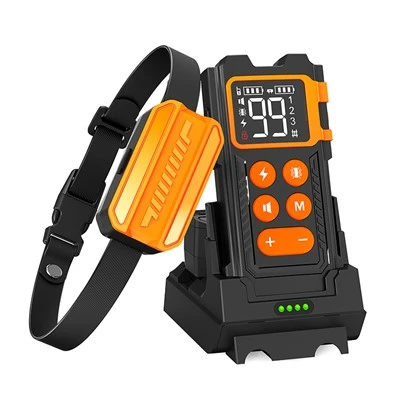
If you’re a hunter wondering if a bark collar is right for your dog, or you’ve tried one before and it didn’t work because you used it wrong, feel free to reach out. I’m here to help you pick the right one, set it up correctly, and make sure it works for your hunting style. We don’t do generic collars—we make collars that are built to handle the tough outdoors, from rain to mud to long days in the field, and that work with your hunting dog’s instincts, not against them.
Cat Water Fountain References:
- American Veterinary Society of Animal Behavior. (2020). The Use of Electronic Training Devices in Animal Training.
- Hunter, L., & Smith, A. (2019). Behavioral Management of Barking in Working Dogs. Journal of Applied Animal Welfare Science, 22(3), 245-258.
- Canine Training Institute. (2021). Best Practices for Bark Collar Use in Hunting Dog Training.
Shenzhen TIZE Technology Co., Ltd.
Shenzhen TIZE Technology Co., Ltd. is one of the most professional dog bark collar manufacturers and suppliers in China, also supports high quality customized service. Welcome to wholesale the newest dog bark collar made in China here and get pricelist from our factory. Also, 1 year warranty is available.
Address: Building 2, Guangyu Industrial Zone, Huangtian Community, Hangcheng Street, Bao’an District, Shenzhen, Guangdong Province, China
E-mail: apple@cntize.com
WebSite: https://www.cntize.com/
