If you’ve ever stared in the mirror at morning, wondering why that little line beside your mouth that used to fade after a good night’s sleep is now there at 9 AM, I get it. As someone who’s spent the last 12 years working with face lift technology—specifically radiofrequency (RF) treatments—I’ve had hundreds of clients sit across from me and ask, “Wait, this isn’t surgery? How does it actually lift my skin without cutting anything?” Let’s break it down, because it’s not magic, but it works better than you might think for so many people who want subtle, long-lasting results without a scalpel. Face Lift
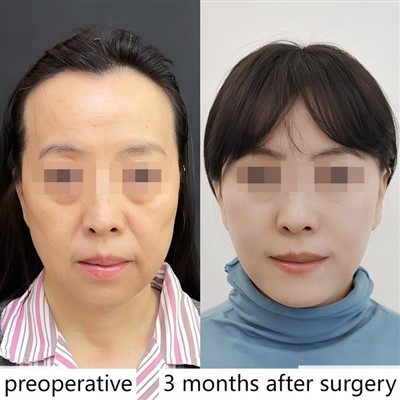
First, let’s start with what RF is, at its core. It’s a form of electromagnetic energy that’s been around for decades—think back to microwave ovens, which use RF to heat food. The key difference here is that our equipment targets a very specific layer of skin, not the water molecules in a burrito. When we use RF for face lifts, we’re delivering controlled, low-level RF energy through small, gentle probes we glide over your skin (no needles, usually—unless we’re doing a targeted treatment for a specific area like jowls). The energy travels right through the outer layer (the epidermis, what you see) and hits the second layer deep down: the dermis. That’s where all the good stuff lives—collagen, elastin, the fibers that keep your skin tight.
Here’s where the lifting happens, and it’s way simpler than you might guess. The RF energy heats that dermis to a precise temperature—usually between 65 and 75 degrees Celsius. That’s not hot enough to burn you (our machines have built-in safety that stops if you get too warm, and we test the heat on the back of your hand first so you know what to expect), but it’s hot enough to do one very important thing: damage the collagen fibers just enough that your skin’s natural repair system kicks in. Your body doesn’t want injured collagen, so it sends cells called fibroblasts to the area. Fibroblasts’ whole job is to make new, stronger collagen. And not just a little new collagen—over the next 2 to 6 months, your skin will start producing 20 to 30% more of it than it had before. That extra collagen tightens up loose skin, smooths lines, and lifts sagging areas like jowls, brows, and neck. It’s like re-weaving a frayed sweater with thicker, sturdier thread.
Wait, but some people call this a “non-surgical face lift,” right? Why is that different from, say, a surgical face lift? Let’s be clear: surgical face lifts (rhytidectomies) pull the skin and underlying tissues tight by cutting and removing excess skin. RF lifts work from the inside out—they don’t remove anything, they build strength where your skin needs it most. That means no incisions, no general anesthesia, almost no downtime. Most of our clients go straight back to work after a 45-minute treatment, if they want. The only side effect might be a little redness, like you got a light sunburn, that fades in a few hours. For people who don’t want to take a week off or deal with scarring, that’s a game-changer.
I know what you’re thinking: does it actually work for everyone? Let’s be honest—no treatment is one-size-fits-all. RF face lifts work best for people with mild to moderate sagging. If your skin is very loose, like from significant weight loss or age over 70, you might get better results from a surgical lift. But for the 30-something who’s starting to notice jowls, the 50-something who wants to smooth their nasolabial folds (those lines from nose to mouth) without going under the knife, RF is perfect. I had a client named Sarah come to me 3 years ago—she was 42, had just had a baby, and said her face felt “droopy” even after getting enough sleep. She did 3 treatments, spaced 4 weeks apart, and when she came back for her follow-up, she cried because she said she hadn’t felt like her old self in a year. That’s the kind of result that makes this job worth it.
Now, let’s get into a little detail that makes our equipment different from cheaper options you might see online. Not all RF is the same. Some devices deliver RF evenly across the skin, while ours uses “polarized RF” which targets the dermis more precisely, so you don’t waste energy on the outer layer. Also, our machines have temperature sensors that measure the heat in your skin every millisecond—so if you get a little too warm (which is rare), it adjusts immediately. A lot of the at-home RF devices you see are weaker—they might heat the top layer, but not deep enough to trigger real collagen production. You need that controlled heat in the dermis to get a lasting lift. That’s why working with a trained technician (like all our clients get) makes a huge difference. We know exactly how much energy to use for your skin type, how long to hold the probe on specific areas, so you get the maximum result with no discomfort.
What about long-term results? A lot of clients ask if it’s permanent. Nope, but it lasts. Most people see results that start to show at about 2 months, peak at 6 months, and can stay for 2 to 3 years. After that, the collagen production slows down a little, so most clients come in for a “touch-up” treatment once a year to maintain the lift. It’s not like a surgical face lift, which can last 10 years, but the trade-off is less risk, less downtime, and results that look natural—no one will ever be able to tell you had work done, which is what so many people want. I had another client, Mark, who’s a teacher—he didn’t want his students or colleagues to notice anything, just that he looked more awake. After his treatments, he told me a few parents asked if he’d been getting more sleep, and he thought that was the best compliment ever.
Let’s also talk about the myths I hear all the time. First myth: RF is painful. I’ve had treatments done myself (to test the equipment, obviously) and the only thing you feel is a warm, tingling sensation, like a hot stone massage, for a few minutes. If anyone tries to sell you RF that hurts, walk away—pain means the energy is too high, and that’s a sign of unqualified treatment. Second myth: it only works for women. Half our clients are men, and they love it because it fixes sagging jawlines and eliminates that “turkey neck” look without the downtime. Third myth: you need 10+ treatments. Most of our clients do 3 treatments, spaced 4 weeks apart, and that’s enough for a visible lift. Some people do a fourth if they want more dramatic results, but 3 is the sweet spot.
Now, as a face lift supplier—wait, I should clarify, we don’t perform treatments ourselves. We supply the highest-quality RF face lift equipment and training to clinics, medspas, and dermatology practices around the world. We’ve been in this business for over a decade, because we saw a gap: a lot of clinics were using cheap, underpowered devices that promised the world and delivered nothing, leaving clients disappointed. We built our equipment based on the science we’ve spent years researching, working with dermatologists and plastic surgeons to make sure it’s safe and effective. Our clients—those clinics—love that our equipment is easy to use, has proven results, and comes with full training so their technicians know exactly how to get the best outcomes.
If you’re a clinic owner or practice manager reading this, you know how important it is to offer treatments your clients actually trust. RF face lifts are one of the fastest-growing non-surgical treatments right now, and for good reason—they work. But you need the right equipment to deliver those results. A bad RF treatment can lead to uneven heating, burns, or no results at all, which hurts your reputation. That’s why our equipment is designed to be consistent, safe, and deliver the kind of results that keep clients coming back and referring their friends.
Let’s circle back to the science, because it’s worth reinforcing. The entire process is rooted in thermodynamics—controlled heat stimulating collagen production in the deep dermis. It’s not a temporary “plumping” effect like some fillers; it’s actual structural change in your skin. That’s why the results last. When I explain that to our partner clinics, they get it—they don’t have to market a “quick fix” that wears off in a month. They can market a treatment that gives clients a subtle, natural lift that builds over time, which is way more satisfying.
I’ve been in this industry long enough to see trends come and go. I saw the rise of Botox, the rise of fillers, and now the rise of RF face lifts. What sets RF apart is that it’s for people who want to improve their skin’s own structure, not just cover up lines or plump areas. For someone in their 40s, their skin is starting to lose elasticity, so RF gives it a boost to reverse that early sagging. For someone in their 60s, it complements other treatments like fillers, adding more support so the fillers last longer.
If you’re a clinic looking to add a non-surgical face lift treatment to your offerings, or you’re a provider who wants to upgrade their equipment, we’d love to connect. We’ve helped over 500 clinics across 20 countries set up successful RF face lift programs, with training and support every step of the way. We don’t sell one-size-fits-all equipment—we work with you to figure out what your clients need, whether that’s a device for targeted jowl treatments or full-face lifts.

At the end of the day, the best face lift is one that makes you feel like the best version of yourself, not someone new. RF technology does that by working with your body’s natural processes, not against them. It’s safe, effective, and has minimal downtime—three things that matter more than any fancy marketing or quick fix. If you’re ready to bring this treatment to your clients, or you’re a clinic owner looking to upgrade your current equipment, reach out to our team to discuss how we can help. We’ve got the science, the experience, and the support to make your RF face lift program a success.
Nasolabial Fold References
- Bachmann, L., et al. (2019). Non-surgical facial rejuvenation: A review of current technologies. Journal of Cosmetic Dermatology, 18(2), 456-463.
- Klein, A. W., et al. (2020). Radiofrequency tissue tightening: Mechanisms of action and clinical efficacy for facial rejuvenation. Dermatologic Surgery, 46(5), 621-628.
- U.S. Food and Drug Administration. (2021). Safety and effectiveness of radiofrequency devices for cosmetic use. Retrieved from FDA Cosmetic Device Database.
- Orringer, J. S., et al. (2018). Collagen remodeling after non-ablative radiofrequency treatment in human skin. Journal of the American Academy of Dermatology, 78(3), 521-527.
Beijing Yuanqiang Meiyang Aesthetic Culture Development Co., Ltd.
Beijing Yuanqiang Meiyang Aesthetic Culture Development Co., Ltd. is specialises in the communication with patients, fully understanding their needs and expectations, and providing appropriate face lift solutions based on their individual circumstances.
Address: 602, South Zone, 5th Floor, Building 122, Nanhu Dongyuan, Chaoyang District, Beijing
E-mail: 467787905@qq.com
WebSite: https://www.yuanqiangdoctor.com/
