Hey everyone, Sam here, and if you’ve ever had to source hydrated lime powder for anything—water treatment, construction, agriculture, even some food processing—you know it’s not just “just lime.” I’ve been supplying this stuff for 8 years, and I still get calls from folks asking, “What’s the big deal about the surface properties of your hydrated lime powder? Why does that matter anyway?” Hydrated Lime Powder

Let’s cut to the chase: surface properties aren’t just some boring science jargon. They’re the reason your product works as intended, or why you’re fighting a losing battle with caking, inconsistent dispersion, or bad reaction rates. I’ve seen so many clients waste money on inferior lime because they didn’t ask the right questions about surfaces—so today, I’m breaking this down like I would with a guy who’s never heard the term “specific surface area” before.
First off, let’s get the basics straight: hydrated lime (that’s calcium hydroxide, Ca(OH)₂, for the science folks) isn’t the same as quicklime (CaO) or limestone (CaCO₃). It’s made by slaking quicklime with water, and the process has a huge impact on its surface. But when we talk about its surface properties, we’re not just talking about how it looks—we’re talking about the chemical and physical traits of the tiny particles that make up the powder, right down to the nanoscale.
Let’s start with physical surface properties, because those are the ones you can actually see or test in a quick experiment. The big one here is specific surface area (SSA)—that’s just how much total surface there is in a given amount of powder, usually measured in m²/g. I test every batch we ship, and I’ll tell you: a low-quality hydrated lime might have an SSA of like 10 m²/g, while our standard grade is around 25-30 m²/g, and our high-reaction grade for water treatment hits 35+. Why does that matter? More surface area means more points where reactions can happen. If you’re using lime to neutralize acidic wastewater, higher SSA means it’ll react faster—no waiting around for slow, uneven neutralization that can mess up your treatment system. I had a paper mill client last year who switched to our lime because their old supplier’s low-SSA lime was taking twice as long to adjust their pH, leading to wasted energy and downtime on their lines. They saved 12% on operational costs just from that.
Another physical surface trait is particle size distribution (PSD). Hydrated lime isn’t all one size, and the size of individual particles shapes the surface too. Finer particles have way more surface area, but here’s the catch: too fine, and they clump up before they even do their job. I’ve seen clients get 325-mesh lime that caked so bad in storage, they had to run it through a sieve before use every single shift. Our process controls mean we cut oversized particles (the ones that cause caking) to less than 1%, and fines stay balanced so they disperse easily in air or water. It’s a fine line—literally. Too coarse, and you’ve got particles that float on water instead of mixing. Too fine, and you’re fighting dust and caking. That’s where our years of refining the slaking process comes in; most smaller suppliers skip the milling step that balances PSD, so their product ends up lumpy or uneven.
Now the chemical surface properties—this is where it gets interesting, and where a lot of suppliers cut corners. The surface of hydrated lime isn’t just pure Ca(OH)₂. When you slake quicklime, the surface picks up stuff like adsorbed water molecules, tiny amounts of unreacted calcium oxide (we call these “free CaO”), and even carbonate from the air if it’s not stored right. Wait, adsorbed water isn’t the same as the water of hydration in the particle structure—it’s the thin layer of water that sticks to the particle surface, like how water beads on a glass but spreads on a lime surface. That adsorbed layer affects how the powder disperses. If a supplier dried their lime too fast, they’ll have too little adsorbed water, and the powder will be super static-y, blowing all over the place when you unload it. Dry it too slow, and you get too much water, leading to caking. We control our drying in a fluidized bed that keeps adsorbed water at 0.2-0.3%—perfect for flowability and dispersion.
Then there’s surface reactivity, which ties straight to chemical surface composition. The surface of our lime has tiny, reactive hydroxyl groups (-OH) that are key for things like flocculation in water treatment, or neutralizing acids. But if there’s too much free CaO on the surface, that can react too quickly, leading to overheating or inconsistent pH. If there’s too much calcium carbonate (from carbonation with air), the surface becomes less reactive, and your lime does nothing. I test for free CaO and surface carbonate every batch—our standard grade has less than 0.5% free CaO and less than 1% surface carbonate, which is the sweet spot for consistent reactivity. A concrete supplier I work with uses our lime to improve the workability of their mortar; they told me our consistent surface reactivity means their mix ratios stay the same every load, instead of tweaking formulas weekly because their old lime’s reactivity was all over the place.
Wait, let’s talk about something you might not have considered: surface charge. Yeah, particles have a charge on their surface, and that affects how they interact with other particles or other chemicals. Hydrated lime particles usually have a positive surface charge at neutral pH, which is why they attract negatively charged dirt or bacteria in water—perfect for flocculating those particles out. But if your lime’s surface charge is off, it won’t flocculate properly. I’ve seen a well drilling company have trouble with their mud treatment because their lime’s surface charge was too low; they switched to our lime, and their mud solids settled 30% faster. That’s not magic—that’s surface charge doing its thing.
Now, why does this matter for you, the person buying hydrated lime powder? Let’s be real—you don’t care about SSA because you’re a chemistry nerd. You care about downtime, wasted product, inconsistent results, and cost. Let’s break down the practical stuff:
- If you’re in water/wastewater treatment: Low SSA means slower neutralization, which leads to over-acidified water that fails regulatory tests. Poor dispersion means you’re dosing more lime than you need, wasting money on product that’s not working.
- If you’re in construction: Caking particles lead to lumpy mortar or concrete mixes, which weaken structural integrity. Uneven reactivity leads to inconsistent curing times, causing project delays.
- If you’re in agriculture: Hydrated lime is used to adjust soil pH, but fine, caked lime won’t spread evenly, leading to patchy pH levels in fields. Surface impurities can even mess with soil microbes you’re trying to support.
- If you’re in food processing: We have food-grade hydrated lime that meets FDA standards, and the surface properties matter here too—consistent surface means consistent reactions for things like corn nixtamalization (for masa, anyone?). I’ve worked with a tortilla company that switched because their old lime would discolor masa sometimes; our consistent surface purity eliminated that problem.
I know what you’re thinking: “How do I make sure the lime I’m buying has the right surface properties?” A lot of suppliers will just tell you “it’s good lime” and hand you a COA (Certificate of Analysis) that lists basic specs like Ca(OH)₂ content. But don’t just look at that—ask for specific surface area, particle size distribution, free CaO, and adsorbed water levels. That’s the stuff that actually tells you about surface properties.
I’ll be honest with you: it takes work to get those properties right. Slaking quicklime at the right temperature, milling to balance PSD, controlling drying, testing surface composition every batch—we don’t cut corners here. A lot of big suppliers churn out lime as fast as possible, skipping those steps, and that’s why you end up with a product that’s more hassle than it’s worth. For 8 years, I’ve focused on perfecting those surface properties because I’d rather have a long-term client who comes back than make a quick buck on a one-time order of cheap lime that doesn’t work.
Let me wrap this up. Surface properties of hydrated lime powder aren’t some abstract science—they’re the backbone of how your product performs. From SSA driving reaction speed to PSD preventing caking to surface charge making flocculation work, every tiny detail of a particle’s surface matters. If you’re tired of dealing with lime that’s inconsistent, caked, or underperforming, let’s talk. We can send you a free sample so you can test the surface properties yourself, no strings attached. We’ll walk through your specific use case, adjust the surface specs to fit your needs, and make sure you get lime that works exactly how you need it to.
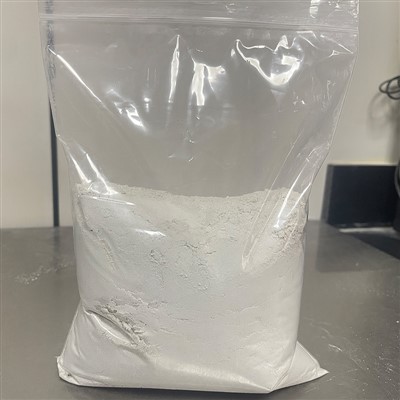
Don’t waste another batch of product on subpar hydrated lime. Hit us up to discuss your requirements and get a quote tailored to your operations. No fluff, just straight talk about lime that delivers results.
Calcium Carbonate Powder References
- Taylor, H. F. W. (1997). Cement Chemistry. Thomas Telford.
- Bartram, J., & Cotruvo, J. (1988). Water Treatment: A Practical Guide to Recent Advances. IWA Publishing.
- Gane, P. A. C. (2002). Particle Surface Properties and Their Impact on Powder Flowability. Powder Technology, 124(3), 187-195.
Chaohu Jirun Energy Conservation and Environmental Protection Technology Co., Ltd.
We’re well-known as one of the leading hydrated lime powder manufacturers and suppliers in China, also support customized service. Welcome to wholesale high quality hydrated lime powder in stock here from our factory. If you have any enquiry about pricelist, please feel free to email us.
Address: No. 9, north of the intersection of Weihai Road and Weili Avenue, within the industrial park of Yinping Town, Chaohu City, Hefei City, Anhui Province.
E-mail: 13305654485@163.com
WebSite: https://www.chaohujirun.com/
