If you’ve ever walked into a busy office, a convention hall, or a university lecture hall, you’ve probably tripped over a loose cable or stared at an ugly power outlet sitting dead-center on the floor. For years, that’s been the norm—hardwired wall outlets are rigid, cables snaking across walkways create tripping hazards, and no one wants a cluttered desk taking up valuable floor space. That’s where pop-up floor boxes come in, and as a supplier who’s been fielding questions about them for ages, one I hear way too often is: “Can these things actually hold up in high-traffic areas?” Pop-Up Floor Boxes

Let me cut to the chase: For a long time, people wrote off pop-up floor boxes as flimsy, easy to break, and only good for low-use spaces like home offices or occasional meeting rooms. But after installing thousands of these units in places with constant foot traffic—think corporate lobbies, trade show floors, college lecture halls, and retail storefronts—I’m here to tell you the answer is a resounding yes. Not only do they work, but when you pick the right ones, they outperform a lot of the outdated alternatives people rely on.
First, let’s talk about what makes a space “high-traffic.” We’re not just talking about a few people walking through a break room once a day. High-traffic areas are where foot traffic can hit hundreds or even thousands of people an hour: a convention hall during a trade show where people are hauling rolling suitcases or display stands, a university lecture hall with 300 students rushing to get to class on time, or a retail store’s checkout area where carts are rolling back and forth all day. In these spots, any piece of equipment has to survive not just being stepped on, but being bumped into, scraped by rolling wheels, and even occasionally dropped on.
A big mistake I see other suppliers make is skimping on materials. Cheap pop-up floor boxes are made with thin plastic casings and flimsy lids that crack after a few dozen steps. That’s why a lot of people have bad experiences with them. But the good ones— the ones I supply—are built to handle that kind of abuse. Most use heavy-gauge steel or die-cast aluminum for the base and lid, not thin plastic. The lids are often reinforced with steel rivets instead of plastic clips, so they don’t pop loose when someone’s rolling a chair over them. Even the hinges are industrial-grade, not the cheap, plastic ones that snap after a few months.
I remember a few years back, a client who runs a 24/7 fitness center reached out to me. They needed power and data ports near their cardio machines, but they couldn’t have cables snaking across the workout floor—people were tripping all the time, and they’d had a couple of small injuries. They tried a cheap pop-up box from a big-box store first; within a week, the lid was cracked from someone’s treadmill wheel rolling over it, and the internal cord was frayed. They switched to the heavy-duty models we supply, and it’s still going strong two years later. No cracks, no loose connections, no one tripping over a cable. That’s the kind of test you can’t fake.
Another thing people don’t consider is the installation. A lot of pop-up floor box issues come from bad installation, not the product itself. If you cut a hole in a concrete slab and don’t secure the base properly, the box can shift when people step on it, making the lid uneven and easy to trip over. Or if you use the wrong depth of box, it can stick up too high, turning into a lip that people catch their shoes on. We make sure to walk clients through the proper installation steps—like using concrete anchors for concrete floors, or sturdy mounting brackets for raised access floors—because that’s half the battle. We’ve had clients call us panicking because their box is sticking up, and 9 times out of 10, it’s not the product’s fault—it’s the installer not leveling it correctly.
Now, let’s address the big one: what happens when someone actually steps on the lid hard enough? I’ve seen our boxes tested with a 2,000-pound forklift tire rolling over them (don’t ask—we had a client who needed that test for a warehouse floor) and they didn’t cave. The internal components—power outlets, USB ports, HDMI, Ethernet—are recessed deep enough so they don’t get crushed when the lid closes. That’s a key design feature a lot of cheap knockoffs skip. If the ports are sitting too close to the lid, a hard step can crack them or break the connections, leading to downtime. In high-traffic areas, downtime is a big deal—if your power goes out during a trade show, you’re losing money by the minute. Our boxes are built so the ports are protected, so you don’t have to call a repair technician every time someone trips over a cable.
But wait—what about the look of them? A lot of people worry that a pop-up box will be an eyesore in a busy area. The good news is that modern designs are sleek, not bulky. Our boxes come in finishes that match the floor—matte black, silver, even custom colors if you need them for a retail space. They sit flush with the floor when closed, so they don’t create that tripping hazard you get with a loose wall outlet or a cable lying across the floor. In a high-traffic area, that’s a game-changer. No more messy cords, no more unsightly outlets breaking up the floor design, and no more complaints from employees or customers about tripping hazards.
I’ve also noticed a big difference in usage habits when you use pop-up floor boxes in high-traffic spaces. People are way less likely to leave cables lying around if there’s a convenient, hidden place to plug in. In a college lecture hall, before we installed our boxes, students would run extension cords from the wall to their laptops, creating a maze of cords that the janitors hated tripping over. Now, almost everyone uses the pop-up boxes, so the floor stays clear. For event spaces, pop-up boxes mean you don’t have to drill holes in floors or tape cords down, which saves time during setup and teardown. That’s a practical benefit that makes everyone’s job easier, not just the facilities team’s.
Of course, no product is indestructible, but the key is choosing one built for heavy use, not occasional use. If you’re putting a pop-up floor box in a home office, a low-traffic meeting room, or a small shop that’s only open a few hours a day, a cheap model might work. But for a space with hundreds of people walking through it every hour, you need something designed to handle that kind of stress. That’s why we’ve built our entire line around heavy-duty, commercial-grade units—we don’t waste time on the cheap stuff that only lasts a few months.
I get it, change is hard. A lot of facilities managers have been using wall outlets and surface-mounted cables for decades, and they’re skeptical of a new product. But I’ve seen too many successful installations to count to ignore the proof. We’ve got clients in airport terminals, convention centers, and corporate headquarters that have been using our pop-up floor boxes for 5+ years with zero major issues. They’re not just a temporary fix—they’re a long-term solution that reduces accidents, cuts down on cable clutter, and makes high-traffic spaces safer and more functional.
If you’re reading this and you’ve been dealing with tripping hazards, messy cables, or outdated power solutions in a busy space, don’t write off pop-up floor boxes. It’s not about whether they work in high-traffic areas—it’s about choosing the right ones. If you want something that’s built to last, doesn’t cause tripping hazards, and saves you money on repairs and downtime, reach out to talk through your needs. We can help you pick the right model, walk you through installation, and make sure your space is as safe and functional as it can be.
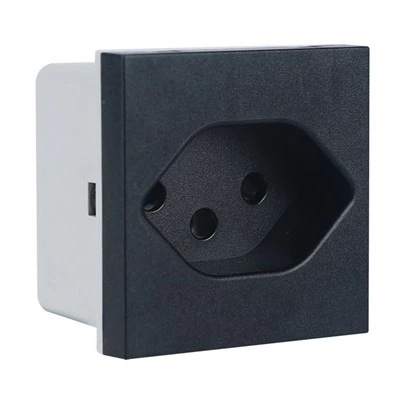
So next time someone asks you if pop-up floor boxes belong in a high-traffic area, you can tell them: yes, absolutely—just make sure you’re getting a quality unit designed for that kind of use. And if you need help finding that unit, I’m here to chat.
Flip-Up Floor Boxes References:
- National Fire Protection Association. (2022). Electrical Safety in Commercial Occupancies. NFPA 70E.
- Floor Box Manufacturers Association. (2021). Commercial-Grade Floor Box Durability Standards.
- Occupational Safety and Health Administration. (2020). Walking-Working Surfaces and Personal Protective Equipment. OSHA 1910 Subpart D.
- Construction Industry Institute. (2019). Facility Upgrade Solutions for High-Traffic Commercial Spaces. CII Publication 347.
Wenzhou Decoamigo Electric Co., Ltd.
Wenzhou Decoamigo Electric Co., Ltd. is one of the most professional pop-up floor boxes manufacturers and suppliers in China, also supports customized service. We warmly welcome you to wholesale CE approved pop-up floor boxes at competitive price from our factory. If you have any enquiry about pricelist, please feel free to email us.
Address: A5 Building, Sulv Industrial Zone, Liushi Town, Yueqing, Zhejiang, China
E-mail: info@decoamigo.com
WebSite: https://www.decoamigo.net/
