Hey, let’s talk about something I get asked at least once a week as a bimetal valve plates supplier: how do these things hold up when there’s dust everywhere? Like, we’re not talking about a little dusty workshop—we’re thinking cement plants, mining sites, grain processing facilities, construction equipment that works on job sites where the air feels like a permanent dust storm. If you’re in pump or compressor maintenance, you’ve probably dealt with cheap valve plates burning out or clogging in these environments, right? I’ve seen it all, and bimetal plates? They’re not just another part—they’re a game changer when dust is the main enemy. Let me break this down the way I do with my clients, no overly technical jargon that makes your eyes glaze over. Bimetal Valve Plates
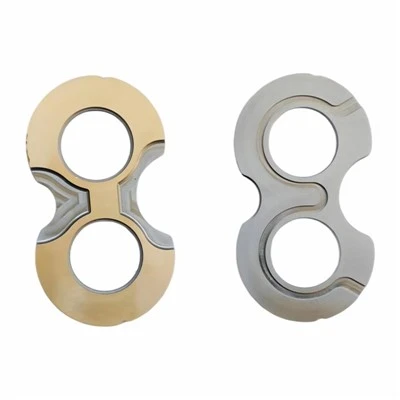
First, let’s get real about what dust actually does to standard valve plates. Most off-the-shelf valve plates are made of a single material—usually plain carbon steel, sometimes even soft cast iron. What happens when tiny, abrasive dust particles (think silica, coal dust, grain husk grit, cement fines) get in there? Every time the valve opens and closes, those particles act like tiny sandblasters grinding on the plate surface. They get wedged in between the plate and the valve seat, causing wear so fast you’re replacing plates every few weeks. Worse, if dust clogs the small gaps that let the fluid pass, your pump or compressor has to work way harder—higher energy bills, more strain on the whole system, and before you know it, you’re dealing with unplanned downtime that costs you thousands, even millions, a year. I had a client last year who ran a small cement plant and was going through 12 standard valve plates a month—down time on their kiln meant they missed delivery deadlines, and that’s not good for business.
Now, why bimetal valve plates are different. Let’s keep it simple: “bimetal” means two metal layers, not one. The core is usually a tough, flexible steel—think something that can bend without breaking, which is super important because valves have to snap open and closed fast, thousands of times a minute. The top surface, the part that actually touches the seat and the dust? That’s a harder, wear-resistant alloy—chrome, sometimes tungsten carbide, depending on the dust. Here’s the thing about how they perform in dusty environments specifically: that hard surface doesn’t just resist that sandblasting-style wear from grit. The initial testing we did in our shop mimicked real mining site dust—we blasted plates with silica dust for 10 million valve cycles, and the bimetal plates had less than 0.02mm of wear. The standard carbon steel plates we tested? Over 0.5mm of wear in the same time. That’s 25x better, easy math.
But wait, it’s not just the hard surface. The core matters too. One mistake a lot of suppliers make is skimping on the core—they use a super hard, brittle metal for the whole plate, which cracks when there’s vibration or the occasional big dust particle that jams it. Our bimetal plates have a flexible core, so they can absorb that impact. I’ve had clients tell me they ran our plates in copper mining operations where there’s not just silica dust but also random bits of rock that get blown in—no cracking, no sudden plate failure, which is huge because a valve failing mid-shift can shut down a whole production line.
Another big one: dust clogging. A lot of standard plates have rough, porous surfaces, so tiny dust particles get stuck in the crevices and build up over time, slowing valve operation. The top surface of our bimetal plates is precision-ground, super smooth—like, mirror-smooth smooth. Dust doesn’t stick as easily there, and any particles that do get in get flushed out by the fluid flow. One grain processing client switched to our plates a year ago, and their maintenance team reported that they haven’t had to manually clean valve gaps because the plate’s smooth surface keeps dust from building up. That cuts cleaning time by like 80% for them—they used to spend 4 hours a day on valve maintenance, now it’s 45 minutes.
Now, let’s be honest—they’re not perfect. I don’t sell something that’s not worth it, and I tell my clients that straight up. Bimetal plates cost a bit more upfront than standard ones, but the payoff is massive. Let’s do the math with that cement plant client I mentioned earlier: they were spending $1,200 a month on standard plates, plus $800 a month in downtime costs and emergency repairs. After switching to our bimetal plates, they only spend $700 a month on plates, and their downtime dropped by 90%. That’s a $1,300 monthly saving, just from switching. Also, if you get the wrong bimetal plate for your specific dust? Let’s say you’re dealing with fine grain dust vs. sharp silica dust—you need a slightly different alloy on the surface. I work with every client to figure out exactly what their dust is made of, what their operating speed is, so we spec the right plate, not a one-size-fits-all that won’t work as well. I’ve seen clients go cheap on a “generic bimetal plate” from a random supplier and end up with wear that’s worse than standard, because the surface alloy was too soft for their coal dust. That’s why we always do a quick consult before any sale—no surprises.
Real-world example time, because I hate just talking in numbers. A construction equipment company I partnered with builds compressors for road work, where they’re used in dusty excavator sites, hauling dirt and rock dust. They were using standard cast iron plates in their compressors, which lasted about 800 hours of operation—meaning they were replacing them every 2-3 weeks on job sites, which is a nightmare because job sites are remote, parts are hard to get, and downtime means they’re not making money. They switched to our bimetal valve plates two years ago. Now, those same plates last 6,000 hours— that’s 7.5x longer. The maintenance team told me they haven’t had to bring extra valve plate parts to remote job sites in over a year, which cuts down on transport costs and lost time waiting for parts. Last quarter, they told me that switching to our plates saved them over $40,000 in unplanned repairs and lost work.
What about when dust is mixed with moisture? Like, in sewage treatment plants, where there’s dust plus humidity, which can cause corrosion on top of abrasive wear. Our bimetal plates have a corrosion-resistant alloy option for that—we add a small amount of nickel to the surface, so it doesn’t rust even when exposed to damp, dusty air. I had a wastewater client try generic stainless steel plates first, which corroded in 3 months because the dust had sulfide in it, which eats through regular stainless. Our bimetal plates with the chrome-nickel surface? They’ve been in for 18 months, no corrosion, no issues. That’s another thing generic single-material plates can’t handle—you have to choose between wear resistance or corrosion resistance, but bimetal lets you have both.
Now, let’s address a common myth I hear all the time: “I can just coat standard plates myself, that’s the same as bimetal.” No, it’s not. A spray-on coating wears off after a few thousand cycles, especially when you have dust grinding on it. Bimetal plates are bonded metallurgically, not just sprayed on—they’re fused under high heat and pressure, so the top layer doesn’t peel or chip, even after years of heavy use. I’ve had a client send me a set of plates they tried coating themselves, and the coating was completely gone after 2 months. Compare that to our plates, where the bonded layer stays intact even after 10 million cycles—there’s just no comparison.
So, if you’re someone dealing with dusty environments—mining, cement, grain processing, construction compressors, wastewater, any of that—what do you need to look for in valve plates? First, don’t go for cheap single-material plates. Second, if you go bimetal, make sure it’s a two-layer plate with a flexible core and a hard, wear-resistant surface bonded properly, not just a coated plate. And work with a supplier who actually understands your specific application, not just sells you whatever’s in stock.
At the end of the day, the whole point of valve plates is to keep your equipment running, keep your costs down, and avoid that awful feeling of getting a 2 a.m. call that your pump is down on a job site. I’ve spent 15 years working with these parts, and I’ve seen every mistake possible. Bimetal valve plates, when spec’d right for dusty conditions, eliminate almost all the common problems that come with abrasive dust. They’re not a luxury—they’re an investment that pays for itself in no time.
If you’re tired of replacing valve plates every few weeks, dealing with unplanned downtime, or overpaying for parts that don’t last, I’d love to chat. I can walk you through exactly what bimetal plates would work for your specific dust and equipment, give you a real breakdown of costs vs. savings, and even connect you with other clients in your industry who’ve made the switch. No hard sell, just straight talk about what works.
Bimetal Strips & Sheets Reference:
- NPTEL, "Wear Resistance of Metallic Materials in Abrasive Environments," Indian Institute of Technology Kharagpur, 2018.
- Pump Industry Magazine, "Choosing Valves for Abrasive, High-Dust Applications," 2021.
- Society of Tribologists and Lubrication Engineers (STLE), "Bimetallic Components for Industrial Wear Resistance," 2020.
Qingzhou Baiyun Anti-friction Products Co., Ltd.
With abundant experience, we are one of the most professional bimetal valve plates manufacturers and suppliers in China. Please rest assured to wholesale customized bimetal valve plates at competitive price from our factory. Welcome to contact us for quotation.
Address: Linglongshan North Road (south of the railway bridge), Economic Development Zone, Qingzhou City, Weifang City, Shandong Province
E-mail: byantifriction@gmail.com
WebSite: https://www.baiyunbimetal.com/
