Hey there! I’m a supplier of Shuttle Table HF Welding Machines, and today I wanna talk about a question that often comes up: What is the maximum welding thickness of a Shuttle Table HF Welding Machine? Shuttle Table HF Welding Machine
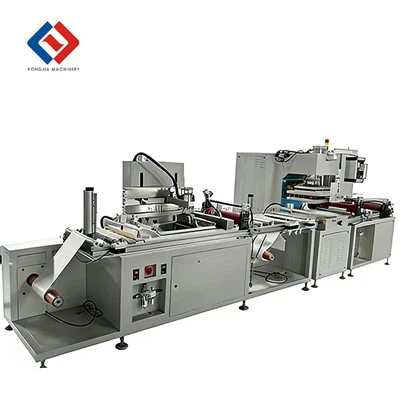
First off, let me give you a bit of a background on these machines. Shuttle Table HF Welding Machines are pretty cool pieces of equipment. They use high – frequency (HF) technology to weld different materials together. The shuttle table design allows for efficient and smooth operation, as it can move the workpieces in and out of the welding area quickly.
The maximum welding thickness of these machines can vary a lot, and it depends on several factors. One of the main factors is the power of the machine. Generally speaking, the more power a Shuttle Table HF Welding Machine has, the thicker the materials it can weld. For example, a lower – powered machine, say around 5 – 10 kilowatts, might be able to handle materials with a maximum thickness of maybe up to 1 – 2 millimeters. These are great for smaller, thinner – walled products like some types of plastic containers or thin sheets used in the packaging industry.
On the other hand, if you’ve got a high – powered machine, like one with 20 – 30 kilowatts or more, you’re looking at a much greater potential for welding thickness. These heavy – duty machines can often weld materials up to 5 – 8 millimeters thick or even more in some cases. They’re typically used in industries where thicker materials are the norm, such as automotive parts manufacturing, where they might be welding thick plastic components for bumpers or interior panels.
Another factor that affects the maximum welding thickness is the type of material being welded. Different materials have different electrical properties, melting points, and heat transfer characteristics. For instance, PVC (polyvinyl chloride) is a commonly welded material with these machines. It has a relatively low melting point and responds well to HF welding. You can usually achieve a greater welding thickness with PVC compared to some other plastics that have higher melting points, like polycarbonate.
When welding PVC, a well – configured Shuttle Table HF Welding Machine can handle fairly thick sections. I’ve seen scenarios where we’ve successfully welded PVC sheets up to 6 – 7 millimeters thick using a good – quality, high – power machine. But if you’re dealing with something like polycarbonate, you might find that the maximum thickness you can weld drops to around 3 – 4 millimeters with the same machine power.
The design of the welding tooling also plays a crucial role. The shape and size of the electrodes, and how they’re positioned in relation to the workpiece, can affect how well the heat is distributed during the welding process. If the tooling is poorly designed, it might not be able to transfer the HF energy evenly across the material, which can limit the maximum thickness that can be welded.
For example, if the electrodes are too small for the material being welded, the heat will be concentrated in a small area, and the material in the center might not reach the necessary temperature for proper welding. On the other hand, if the electrodes are too large and not properly shaped, there could be areas where the heat is dissipated too much, also leading to incomplete welding. A well – designed set of tooling can optimize the HF energy transfer, allowing for reliable welding of thicker materials.
Now, it’s important to note that when we talk about the maximum welding thickness, it’s not just about slapping two thick pieces of material together and expecting a perfect weld. The quality of the weld is also a key consideration. A machine might technically be able to weld a certain thickness, but the resulting weld might not be strong enough or might have visible defects.
To ensure a high – quality weld, proper pre – processing of the materials is necessary. This could involve cleaning the surfaces to remove any dirt, grease, or oxidation, which can interfere with the welding process. The alignment of the workpieces is also critical. If the two pieces aren’t properly aligned, the weld might be uneven, leading to weak spots.
In addition, factors like the welding pressure and the duration of the HF exposure also need to be carefully adjusted. Too much pressure can deform the material, while too little pressure might not allow the two pieces to bond properly. Similarly, if the HF exposure time is too short, the material won’t melt and bond, and if it’s too long, it can overheat and cause the material to degrade.
So, as a supplier of Shuttle Table HF Welding Machines, I always tell my customers that determining the maximum welding thickness isn’t a one – size – fits – all answer. It’s a complex equation that takes into account the machine’s power, the type of material, the tooling design, and the proper processing parameters.

If you’re in the market for a Shuttle Table HF Welding Machine, or if you’ve got specific requirements regarding welding thickness, I’d be more than happy to have a chat with you. We can go over your needs in detail, and I can help you choose the right machine that can meet your welding requirements. Whether you’re looking to weld thin plastics for a small – scale operation or thick materials for a large – scale manufacturing process, I’m here to assist. So don’t hesitate to reach out if you’re interested in purchasing a machine or need more information on how our machines can work for you.
Blister Packaging Machine References:
- Industrial Plastics Welding Handbook
- High – Frequency Welding Technology Research Papers
Dongguan Yongjia Machinery Equipment Co., Ltd.
We are one of the most reliable shuttle table hf welding machine manufacturers and suppliers in China, specialized in providing high quality customized service. Please feel free to wholesale advanced shuttle table hf welding machine at low price from our factory. For quotation, contact us now.
Address: No. 240, Chashan South Road, Chashan Town, Dongguan City, Guangdong Province, China
E-mail: info@yjwelding.com
WebSite: https://www.yjhighfrequencymachine.com/
