Hey there, let’s cut to the chase—if you’re here because you’re deep in the market for a limestone slurry pump, you’ve probably run into that one pump that just can’t keep up with thick, gritty slurry, right? It clogs every other shift, wears out impellers in weeks, and leaves you with a pile of repair bills that make you wince. I’ve been on this side of the table as a pump supplier for almost 15 years, and the question I get more than any other is: “What even makes the impeller of a limestone slurry pump different from, say, a regular water pump impeller?” Spoiler—everything. This isn’t some random blade stuck on a shaft; it’s the single most important part of the whole pump, and if you mess up its design, you’re gonna be drowning in slurry before lunch. Let’s break this down like we’re chatting over a cup of coffee (no boring engineering jargon, I promise). Limestone Slurry Pump
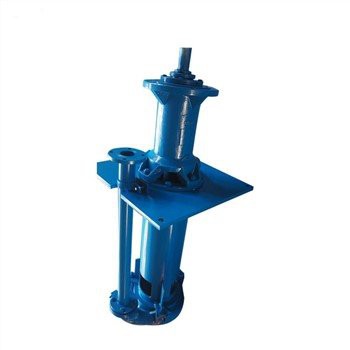
First off, let’s get one thing straight: limestone slurry isn’t your average liquid. It’s not just water with a little powder mixed in—that’d be easy. We’re talking about a thick, sandy, sometimes chalky mix of crushed limestone rock, water, and a bunch of tiny, sharp particles that act like little pieces of sandpaper. If you take a regular pump impeller—like the ones for garden hoses or factory water lines—stick that in this slurry, here’s what happens fast. Those tiny sharp particles will dig into the metal of the impeller, eat away at the blades, and before you know it, the impeller’s worn down so much it can’t move enough slurry, and your whole system grinds to a halt. So the first rule of limestone slurry impeller design: build it to handle abrasion, first, and flow second.
Now, let’s talk about the main types of impellers we use for these pumps. You’ve probably heard of closed, open, and semi-open impellers, but for limestone slurry? We pretty much only use two: closed impellers and semi-open ones. Wait, why not open? Open impellers have those blades sticking out without a cover on the back, right? They’re easier to clean, but they have zero sealing between the back of the blades and the pump casing. Slurry gets wedged in that gap, and it wears everything out way faster. We used to try open ones back in the early 2000s for a mining client, and they had to replace impellers every 10 days. Never again.
So closed impellers—these are the standard go-to for most limestone slurry applications. They’ve got both a front cover (the part that faces the pump’s suction side) and a back cover, like a little fan blade sandwich. What’s the big win here? The covers create a sealed chamber around the blades, so slurry can’t sneak into the gaps between the impeller and the pump casing as easily. That cuts down on wear a ton, and also helps with flow efficiency—more slurry gets moved instead of leaking out through those gaps. But wait, not all closed impellers are the same, even for limestone. We tweak the blade design all the time based on how thick the slurry is, how big the limestone particles are, and how much flow you need.
Then there’s semi-open impellers. These are kind of a middle ground—they’ve got blades with a back cover, but no front cover. We use these a little less often, usually when we’re dealing with really chunky limestone slurry—like if you’re moving slurry with particles bigger than half an inch, say, from a primary crushing stage. The big upside here is that there’s no front cover to clog up with those big chunks. If you tried a closed impeller on chunky slurry, those big rocks would get stuck between the blade and the front cover, jam the pump, and you’re shutting down operations to take it apart. Semi-open lets those chunks pass through easier, though you trade a little abrasion resistance for that. It’s a balance, and that’s what we get paid for as suppliers—figuring out which balance works for your specific job.
Now let’s get into the nitty-gritty of blade design, because that’s where the magic (or the disaster) happens. First, blade angle. Regular water pumps have blades that curve pretty steep, right? For slurry, we flatten that curve out a lot. Why? Steep curves create more turbulence, and turbulence makes the particles in the slurry bounce around more—more bouncing means more wear on the impeller blades. Flatter curves keep the flow smoother, so the particles slide along the blades instead of slamming into them. That cuts down on abrasion like nothing else. We usually set blade exit angles at around 20 to 30 degrees, depending on the slurry’s viscosity—thicker slurry gets a slightly wider angle to keep it moving without stalling.
Then there’s blade thickness. You’d think thicker blades = more durable, right? Yeah, but too thick and you’re restricting flow. Limestone slurry can be slow-moving if the blades are too bulky, which lets the particles settle on the blades. Settling particles = more wear, plus clogged pumps. So we tune the thickness to the particle size: smaller limestone particles (like the 200-mesh stuff we use in power plant flue gas desulfurization, FGD for short) get thinner blades, because the particles are tiny and don’t need as much clearance. Larger particles (like 1/4 inch or bigger for mining slurry) get thicker blades to hold up against the impact. That’s another thing we don’t cut corners on—we test blade thickness with every client, based on their exact limestone specs.
Wait, let’s talk about something no one else mentions a lot: the impeller’s clearance. That’s the tiny gap between the end of the blades (or the front cover, for closed impellers) and the pump casing. For regular pumps, you want that gap as small as possible for efficiency. For slurry pumps? We actually leave it a little bigger. Why? Because if the gap is too small, tiny limestone particles get wedged in there, and they grind away both the impeller and the casing super fast. A slightly bigger gap lets those particles pass through instead of getting stuck. Yeah, it drops efficiency a tiny bit—like 2 or 3 percent—but it doubles or triples the impeller lifespan. That’s a tradeoff every operator will take over changing impellers every week, trust me.
Now, material choice. I know we said design, but the impeller’s design is tied directly to what we make it out of, and that’s non-negotiable for limestone. You can design the perfect blade angle, but if you use regular cast iron, it’s gone in a month. We use two main materials for limestone slurry impellers: high-chrome iron and polyurethane. High-chrome is the workhorse—great for abrasive, high-velocity slurry, like the stuff moving at 100 feet per second in the main pipeline. It’s got tiny chrome carbides embedded in the iron, so it’s way harder than regular steel. Polyurethane? We use that for more gentle applications, like the final stage of processing where the limestone is super fine. It’s flexible, so it absorbs the impact of particles better than metal, and it’s quieter too. But it can’t handle high temperatures or really high velocities, so we don’t use it for the rough stuff. And here’s a design trick: we line the back of closed impellers with a thin layer of polyurethane if the slurry is extra abrasive—adds an extra layer without weighing the impeller down.
Wait, let’s throw in a real example to make this concrete (pun totally intended). Last year we had a client in the Midwest running a limestone quarry, moving slurry from the primary crusher to the processing plant. They’d been using a generic pump from a big brand, impellers wore out in 28 days, costing them $12,000 a month in replacement parts and downtime. We swapped them for our semi-open impeller design, with high-chrome blades set at a 25-degree exit angle, extra clearance, and tuned for their 1/2-inch average limestone particles. The impellers lasted 112 days—four times longer—so their parts costs dropped by 70%, and they didn’t have to shut down operations every month like they were before. That’s what good impeller design does: it’s not just theory, it’s real money in your pocket.
Oh, and one more thing we pay attention to: balance. If an impeller isn’t balanced right, it vibrates like crazy. That vibration puts extra stress on the bearings and the pump shaft, which leads to more wear overall, even if the impeller itself is durable. For limestone slurry, we dynamic-balance every single impeller we build, not just static-balance. Static balance is just checking if it’s weight evenly side to side—dynamic balance checks if it’s balanced when it’s spinning at full speed, which is where the real vibration happens. We do this even for our standard models, but for custom designs (like for super thick slurry) we add a second balancing step to make sure it doesn’t shake the whole pump house apart.
Now, let’s address the elephant in the room: why can’t I just buy a cheap off-brand impeller? I see it all the time. Operators see a $500 impeller vs. our $1,200 one, and jump on the cheap one. But that cheap impeller was designed for water, not limestone. The blade angle is wrong, the clearance is too tight, the material is just regular cast iron. You put it in your slurry, it wears out in 10 days, so you spend $500 ten times a month = $6,000, which is already more than our $1,200 impeller. Plus the downtime, the lost production, the extra labor to change it out. It’s not even close. Good impeller design isn’t a luxury—it’s an investment that saves you way more in the long run.
At the end of the day, the impeller is the heart of your limestone slurry pump. If the impeller is trash, the whole pump is trash. The best designs aren’t about making the most complex blades or the shiniest metal—they’re about solving the specific problems limestone slurry throws at you: abrasion, clogging, wear, downtime. We’ve been refining these designs for years, working directly with quarry operators, power plant engineers, and mining teams, so we know what works when you’re moving that thick, gritty stuff day in and day out.

If you’re sick of replacing impellers every month, tired of clogging pumps, or just want to stop throwing money at repairs that don’t fix the root problem, let’s chat. We can walk through your exact application, talk about your limestone particle size, slurry thickness, flow rate, and figure out the right impeller design (and whole pump) that’ll keep your operations running smooth. No pushy sales stuff, just real advice from someone who’s been in this game long enough to know what works.
Mutistage Water Pump References:
- Karassik, I. J., et al. (2008). Pump Handbook. McGraw-Hill.
- Australasian Pump Users Association. (2019). Slurry Pump Design and Operation Guide. APMA Publications.
- The American Society of Mechanical Engineers (ASME). (2021). Standard for Centrifugal Slurry Pumps. ASME B73.3-2021.
- Niga, R. (2015). Abrasion Resistance in Centrifugal Pump Impellers for Mineral Slurries. Journal of Fluids Engineering.
Hebei Tongda Pump Co., Ltd.
Hebei Tongda Pump Co., Ltd. is well-known as one of the leading limestone slurry pump manufacturers and suppliers in China. Our factory offers high quality limestone slurry pump made in China with competitive price. Welcome to contact us for pricelist.
Address: No.158, Bo Ming Xi Lu, Boye County, Baoding City, Hebei Province
E-mail: wendy@hbtdby.com
WebSite: https://www.waterpumpmanufacturer.com/
