In the world of manufacturing and metalworking, bending forming is a fundamental process. As a leading Bending Forming supplier, I’m frequently engaged in discussions about the types of dies employed in this crucial operation. Understanding the various dies used in bending forming is essential for both the efficacy of the process and the quality of the final product. In this article, I’ll delve into the different kinds of dies for bending forming, exploring their characteristics, applications, and the factors to consider when selecting them. Bending Forming
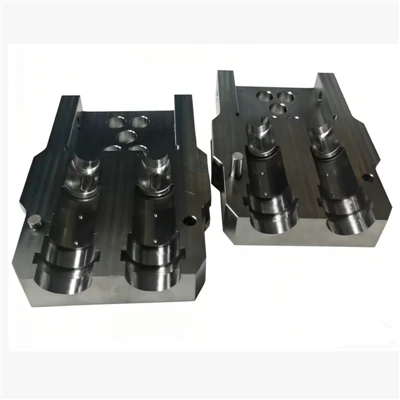
1. V – Dies
V – dies are among the most commonly used dies in bending forming. They are characterized by their V – shaped opening, which determines the bend angle and radius of the workpiece. The V – shape of the die exerts pressure on the metal sheet or plate, causing it to bend into the desired angle.
Types of V – Dies
- Standard V – Dies: These dies come in a range of standard sizes and angles, typically 90°, 120°, or other commonly used angles. They are versatile and can be used for a variety of bending applications. For example, in the production of cabinet frames, standard 90° V – dies are often employed to create precise right – angled bends.
- Custom V – Dies: In some cases, specific bending requirements may demand custom – made V – dies. These dies can be designed to have unique angles, radii, or widths to meet the exact specifications of a particular project. For instance, in the aerospace industry, where complex geometries are common, custom V – dies are used to bend thin – walled metal components with high precision.
Advantages of V – Dies
- Flexibility: V – dies can be used to bend different thicknesses and materials of metal sheets. By adjusting the width of the V – opening and the pressure applied, a wide range of bend angles can be achieved.
- Cost – effectiveness: Standard V – dies are relatively inexpensive and widely available. This makes them a popular choice for small – to – medium – scale manufacturing operations.
Disadvantages of V – Dies
- Limited Bend Radius: The minimum bend radius achievable with V – dies is often limited by the die design and the material properties. For very small bend radii, other types of dies may be more suitable.
- Marking on the Workpiece: The contact between the workpiece and the V – die can sometimes leave marks on the surface of the metal, which may require additional finishing processes.
2. U – Dies
U – dies, as the name suggests, have a U – shaped cavity. They are typically used for creating U – shaped or channel – shaped bends in metal sheets or plates.
Applications of U – Dies
- Manufacturing of Channels: U – dies are commonly used in the production of metal channels for structural applications, such as in building construction or automotive manufacturing. The U – shaped profile provides excellent strength and stability.
- Enclosure Production: They are also ideal for creating enclosures or housings for electronic devices. The smooth and uniform bend produced by U – dies ensures a proper fit and a professional appearance.
Advantages of U – Dies
- Consistent Bend Shape: U – dies produce a consistent U – shaped bend, which is important for applications where the shape of the component is critical.
- Reduced Springback: Compared to some other types of dies, U – dies can help reduce springback, the tendency of the metal to return to its original shape after bending. This results in a more accurate final product.
Disadvantages of U – Dies
- Limited Bend Angle: U – dies are mainly designed for creating U – shaped bends, so they are not as versatile as V – dies when it comes to achieving different bend angles.
- Higher Tooling Costs: Custom – made U – dies can be more expensive to manufacture than standard V – dies, especially for complex designs.
3. Rotary Bending Dies
Rotary bending dies use a rotating mechanism to bend the metal. This type of die is particularly suitable for bending pipes, tubes, and rods.
How Rotary Bending Dies Work
Rotary bending dies consist of a set of rollers that are arranged in a specific configuration. As the workpiece passes through the rollers, it is gradually bent into the desired shape. The rotation of the rollers ensures a smooth and continuous bending process.
Applications of Rotary Bending Dies
- Pipe and Tube Bending: In the plumbing, HVAC, and automotive industries, rotary bending dies are extensively used to bend pipes and tubes for various applications, such as creating curved pipes for fluid transportation or exhaust systems.
- Rod Bending: They are also used for bending rods in the production of metal furniture, handrails, and other structural components.
Advantages of Rotary Bending Dies
- Smooth Bends: The rotating action of the dies results in smooth and uniform bends, with minimal distortion of the workpiece.
- High Precision: Rotary bending dies can achieve high levels of precision, making them suitable for applications where tight tolerances are required.
Disadvantages of Rotary Bending Dies
- Limited Thickness Range: Rotary bending dies are generally more suitable for thin – walled pipes and tubes. Bending very thick – walled materials may require more powerful equipment and may not be as effective.
- Complex Setup: The setup of rotary bending dies can be more complex compared to other types of dies, requiring careful adjustment of the rollers and the bending parameters.
4. Air Bending Dies
Air bending is a process where the metal is bent by the force of the punch against the die, with the workpiece only contacting the die at the edges. Air bending dies are designed to take advantage of this principle.
Working Principle of Air Bending Dies
In an air bending process, the punch forces the metal sheet into the V – shaped die opening, but the metal does not fully conform to the shape of the die. Instead, it forms a bend based on the pressure applied and the distance between the punch and the die. This allows for the creation of a wide range of bend angles using a single die.
Applications of Air Bending Dies
- Prototyping: Air bending dies are often used in the prototyping phase of product development. Since they can be used to create different bend angles without the need for multiple dies, they offer a cost – effective way to test different designs.
- Small – Batch Production: For small – batch manufacturing, air bending dies are a practical choice. They can be quickly set up and adjusted to produce a variety of bent parts.
Advantages of Air Bending Dies
- Versatility: As mentioned earlier, air bending dies can be used to create a wide range of bend angles with a single die, which makes them very versatile.
- Reduced Tooling Costs: Since fewer dies are required compared to other bending methods, the overall tooling costs are lower.
Disadvantages of Air Bending Dies
- Springback Variation: Air bending is more susceptible to springback variation, as the bend angle is affected by factors such as the material properties, thickness, and the amount of pressure applied. This may require additional compensation or adjustment in the bending process.
- Limited Bend Radius Control: Achieving precise and consistent bend radii can be more challenging with air bending dies compared to other types of dies.
Factors to Consider When Selecting Dies for Bending Forming
- Material Properties: Different materials have different mechanical properties, such as hardness, ductility, and elasticity. These properties affect the choice of die and the bending process. For example, harder materials may require more robust dies and higher bending forces.
- Bend Angle and Radius: The desired bend angle and radius are crucial factors in die selection. Different dies are better suited for different angle and radius requirements. For instance, if a small bend radius is needed, a die with a sharp inner radius may be required.
- Production Volume: For high – volume production, the cost – effectiveness and durability of the dies become important considerations. Harder and more wear – resistant dies may be preferred to reduce tooling replacement costs over time.
- Surface Finish Requirements: If the final product requires a smooth surface finish, the type of die and the bending process should be chosen carefully to minimize marking or scratching on the workpiece.
Conclusion
As a Bending Forming supplier, I understand the importance of choosing the right die for the job. Each type of die has its own advantages and disadvantages, and the selection depends on various factors such as the material, the desired bend, the production volume, and the surface finish requirements. By having a comprehensive understanding of the different dies used in bending forming, manufacturers can optimize their processes, improve the quality of their products, and reduce costs.
If you are in need of high – quality bending forming services or are looking for advice on die selection for your specific project, I invite you to contact me to discuss your requirements. We can work together to find the most suitable solutions for your manufacturing needs.
Stamping Forming References
- Die Design Handbook, Society of Manufacturing Engineers
- Metal Forming Processes and Materials, Pearson Prentice Hall
- Bending Technology in Sheet Metal Fabrication, Industrial Press Inc.
Dongguan Xinchuan Precision Manufacturing Co., Ltd.
As one of the most professional bending forming manufacturers and suppliers in China, we offer a quick lead time for customized orders. Please feel free to buy precision bending forming made in China here from our factory. Contact us for quotation.
Address: #16 Gangjian Road, Changping Town, Dongguan City, Guangdong, China. 523000
E-mail: FreeQuote@xcprecision.com
WebSite: https://www.xcprecisions.com/
