Hey there! If you’ve ever walked past a construction site, checked a breaker panel in your basement, or even just glanced at the metal box sitting on the side of a small shop, you’ve seen a distribution box. But have you ever stopped to think about why that box is built the way it is? Like, it’s not just a metal container to hold wires—it’s actually packed with little (and not-so-little) safety features that keep your space from turning into a huge mess. As a distribution box supplier who’s been in this game for over 10 years, I get asked all the time: “What makes a good distribution box, anyway?” Today, I’m breaking down the key safety features that don’t just check a box (pun totally intended) but actually protect people, property, and wiring systems. Let’s dive in, no boring jargon, I promise. Distribution Box
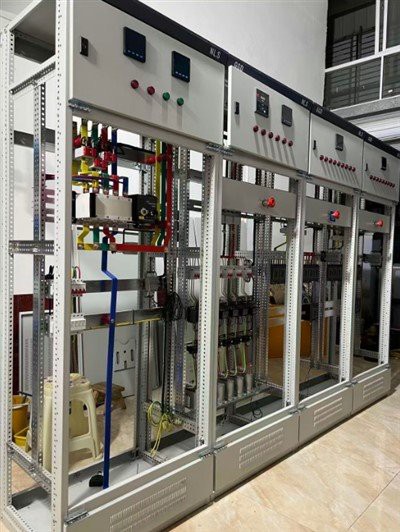
First off, let’s start with the basics: a distribution box (sometimes called a breaker box, load center, or panel board—we use “distribution box” day-to-day, so that’s what I’m sticking to) does exactly what the name says: it takes electricity coming from your main power line and splits it into smaller circuits for lights, outlets, appliances, and all that stuff. Without it, you’d have one huge, exposed wire running straight into your home or business, which is a fire hazard waiting to happen. But safety is non-negotiable here, so every part is designed to prevent the three big electrical boogeymen: overloads, short circuits, and electrical shocks.
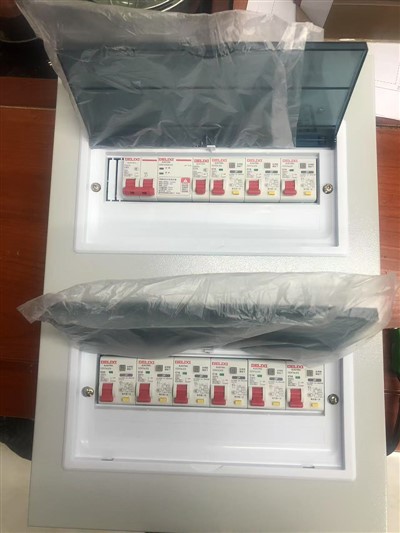
Let’s talk about circuit breakers first, because these are the heroes of the distribution box. Old-school systems used fuses, which you had to screw in every time they blew—super annoying, and you might not have a spare when a microwave overloads the kitchen circuit. Breakers, on the other hand, are automatic. The best ones have a built-in thermal-magnetic trip mechanism, which is basically a two-for-one safety deal. Here’s how it works: if you’re running too many things on one circuit (like a space heater, a toaster, and a coffee maker all plugged into the same outlet on the same breaker), that’s an overload. The thermal part is a small metal strip that bends when it gets too hot from excess current. Once it bends enough, it flips the breaker to “off” and cuts power—no fire, no fried wiring. Then, if there’s a short circuit (like a frayed wire touching another wire, which sends a massive surge of electricity through the system), the magnetic part kicks in instantly, like in a millisecond, to shut it down. That’s way faster than a fuse, which is why most places now require breakers instead of fuses. Wait, and pro tip: not all breakers are the same. Cheap breakers might trip too slowly or not at all, which defeats the whole purpose. When we source our breakers, we make sure they’re UL-listed (I’ll mention that a few times, it’s the big safety certification in North America) so you know they meet strict standards.
Next up, ground fault circuit interrupters—you’ve probably heard of GFCI outlets, but did you know they can be built right into the distribution box? GFCIs are the ones that have that test and reset button, usually in bathrooms, kitchens, or garages where water and electricity mix (bad combo, by the way). The GFCI safety feature in the box monitors the “balance” of electricity going out and coming back. If even a tiny amount of current is leaking to the ground (like if you drop a hair dryer in the sink), it cuts power in 1/40 of a second—way faster than the human body can get a dangerous shock. Wait, there are also AFCIs—arc fault circuit interrupters—for things like damaged wiring in walls, where a small arc (a tiny spark) could start a fire. AFCIs detect that faint arc before it becomes a bigger fire, which is super important for older homes with aging wiring. A lot of new construction codes require both GFCIs and AFCIs, so a good distribution box should have slots for those, not just basic breakers.
Now, let’s talk about the box itself— the outer casing and inner wiring space. You don’t want a flimsy metal box that gets dented easily, right? A lot of people skip over the enclosure, but it’s a huge safety thing. First, the material: most good distribution boxes are made of galvanized steel, which resists rust and corrosion. If you’re installing one outdoors (like for a shed or a farm), you need a waterproof enclosure—we call those “NEMA 3R” rated, which means they keep rain, snow, and debris out. Cheap plastic boxes might work for small, low-voltage things, but they can melt if there’s a fault, so steel is the way to go for main power distribution. Also, the enclosure has to have a tight-fitting cover that locks (or at least latches) so no one can accidentally stick a fork or a screwdriver in there while it’s live. We’ve even had customers come back and say their old box had a loose cover, and a kid almost got a shock—so that’s a feature we never cut corners on.
Inside the box, there are bus bars—those long metal strips that carry electricity to all the breakers. The safety here is in how they’re insulated. Good distribution boxes have plastic barriers (called “bus bar covers”) between the hot (live) bus, neutral bus, and ground bus, so a breaker switch can’t accidentally touch a hot wire when you’re installing it. Some boxes also have “dead front” construction, which means all live parts are covered, so you don’t have exposed copper inside the box—super important for electricians working on it. I’ve seen some cheap boxes where you can see the bare bus bars through a crack in the plastic, and that’s just asking for a mistake. Also, the neutral and ground wires are separated in a good box—no mixing them, because neutral is supposed to carry current back, and ground is for safety, so mixing them can cause a shock. That’s a common mistake in DIY installs, so a quality box will have dedicated terminals for each.
Wait, let’s not forget surge protection—something people sleep on, literally. Power surges can come from lightning, utility company equipment switching, or even turning on a big appliance like an air conditioner. Those surges (which can be 100 times higher than normal voltage) can fry your TV, fridge, and all kinds of electronics. A lot of modern distribution boxes have built-in surge protective devices (SPDs) that absorb that extra voltage and divert it to the ground, so it doesn’t go through your circuits. I always tell customers: a surge might seem like no big deal, but replacing a $10 SPD is way cheaper than replacing a $2,000 smart TV. Some people add standalone surge protectors at every outlet, but having it in the box is a whole system layer of protection.
Another underrated feature: short circuit current rating (SCCR). This is basically how much electricity a distribution box can handle during a short circuit before it breaks. If a box has a low SCCR, and a big short circuit happens, the box itself could arc or catch fire—yikes. When we test our boxes, we make sure they have a high SCCR (usually 10 kA or higher, which is the minimum for most residential use) so they can safely shut down even a big surge without failing. It’s not the flashiest feature, but it’s what makes the difference between a small trip and a disaster.
Now, let’s talk about accessibility and labeling—wait, is that a safety feature? Hell yeah it is. If a breaker isn’t labeled, you’re gonna be fumbling around in the dark trying to find the one that controls the kitchen lights when there’s a power outage. A good distribution box has space for labels, or even pre-printed labels for common circuits (like “garage,” “master bedroom,” “outdoor lights”) so you don’t have to guess. Also, the main breaker— the big switch that cuts all power to the box—should be easy to reach, not hidden behind other stuff. If the main breaker is too far back, someone might not be able to flip it in an emergency. We design our boxes so the main breaker is front and center, with clear instructions on how to turn it off safely.
Wait, let’s address a common myth: a bigger distribution box isn’t always safer. If you have a box that’s too small for your circuits, you might end up overcrowding it, which means breakers are too close together, or wires are crammed so tight they can’t dissipate heat. That’s a fire hazard. A quality supplier (that’s us!) will help you size the distribution box for your needs—whether it’s a 12-circuit box for a small apartment, a 30-circuit one for a commercial store, or a 60-circuit for a big warehouse. We don’t sell you a box that’s too small just to make a quick sale; we make sure it has enough space for future circuits, too, because adding a new appliance or a room later means you won’t have to upgrade the box right away.
I’ve been on a few service calls where old distribution boxes had missing features, and it’s scary. One time, a homeowner’s old box didn’t have AFCIs, and a frayed wire behind their wall started a small fire before the smoke detector went off. Another time, a shed had a cheap plastic box that melted during a storm surge, and the owner almost got shocked when he went to check the power. That’s why we make sure every box we supply has those core safety features: thermal-magnetic breakers, GFCI/AFCI compatibility, galvanized steel enclosures, insulated bus bars, surge protection, and a high SCCR.
Now, why does this matter for you, whether you’re a homeowner, an electrician, or a business owner? Because a distribution box is the hub of your electrical system. If it’s not built with safety in mind, all the fancy appliances and wiring in your space are useless. It’s not something you think about until it fails, but when it does, you’re glad you invested in a box that’s got the right safety built in.
Wait, let’s wrap this up— what should you look for when you’re buying a distribution box? First, check for UL listing (or the equivalent in your country, but UL is standard here). Make sure it has slots for GFCIs and AFCIs if you’re in a place that requires them. Ask about the SCCR, the enclosure rating (if it’s outdoor), and whether it has insulated bus bars and labeled spaces. And definitely go with a supplier that doesn’t just sell boxes but can help you size it correctly.
If you’re in the market for a distribution box—whether for a new build, a replacement, or an upgrade—we’ve got you covered. We don’t cut corners on safety, because we know that every box we supply is protecting a home, a business, and the people inside. To chat through your needs, just reach out to us for a procurement discussion. We’re here to make sure you get a box that’s not just compliant, but actually keeps you safe.
Distribution Chamber References:
- National Electrical Code (NEC) Handbook, Article 408 (Load Centers)
- Underwriters Laboratories (UL) Standard 67 (Load Centers for Over 600 Volts, Nominal)
- Occupational Safety and Health Administration (OSHA) Electrical Safety Guidelines, 29 CFR 1910.303
- Electrical Construction Maintenance (EC&M) Magazine, “Key Safety Features in Modern Distribution Panels,” 2022
- Institute of Electrical and Electronics Engineers (IEEE) Standard 1584 (Guide for Performing Arc-Flash Hazard Calculations)
Anhui Nanxian Electric Co., Ltd.
With abundant experience, we are one of the most professional distribution box manufacturers and suppliers in China. We warmly welcome you to buy advanced distribution box for sale here and get quotation from our factory. All customized products are with high quality and low price.
Address: Factory Unit 03-2, Building 21, Feidong Yinfeng Industrial Park Co., Ltd., Northeast Corner of Manquan Road and Changle Road, Hefei Circular Economy Demonstration Park, Feidong County, Hefei City, Anhui Province.
E-mail: 541580567@qq.com
WebSite: https://www.nxelepower.com/
