If you’ve ever walked into a water treatment plant, a swimming pool maintenance shed, or even a small-scale aquaculture farm, you’ve probably glanced at a wall-mounted meter with a probe hanging off it, dipped into a tank of water. Most people might write that off as just another piece of shiny industrial gear, but as someone who’s spent the last 12 years building and supplying these probes, I know that little device is the unsung hero of water quality management. Today, I want to pull back the curtain on how digital ORP probes work—not just the textbook science, but the practical, day-to-day engineering that makes them reliable enough to run 24/7 in environments where even a tiny calibration slip can throw off an entire process. ORP Probe
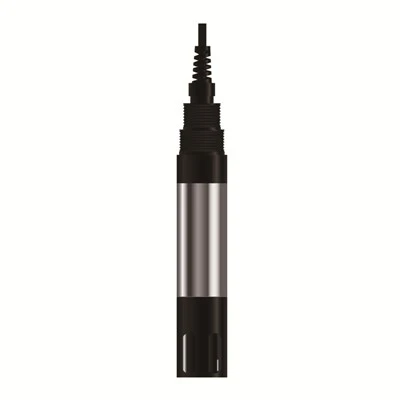
First, let’s start with what ORP even stands for, because I still meet customers who mix it up with pH, and that’s not their fault. ORP is short for Oxidation-Reduction Potential, a measurement of the tendency of a solution to either gain electrons (reducing) or lose them (oxidizing). Unlike pH, which only measures hydrogen ion concentration, ORP is a broader metric of the overall chemical activity in water—stuff like disinfectant efficacy, the breakdown of organic waste, or the stability of metals in a solution. For example, in a swimming pool, ORP tells you if chlorine is working well enough to kill bacteria; too low, and you’re risking swimmer illness; too high, and you’re wasting chemicals. In industrial wastewater treatment, ORP controls the addition of reducing agents to neutralize toxic heavy metals before discharge. That’s why these probes aren’t just nice to have—they’re mission-critical for compliance and safety.
Now, the old analog ORP probes, the kind we used to ship 10 years ago, were clunky, hard to calibrate, and prone to drift if they got coated with biofilm or mineral scale. Digital ORP probes, the ones we produce now, fix most of those issues, and the core difference is how they handle the electrical signal. Let’s break that down step by step, no overly complicated jargon, I promise.
Every ORP probe has two main electrodes: the measuring electrode and the reference electrode. Back in the day, both were separate, requiring two cables to run to the meter, which meant more wiring, more points of failure. Digital probes combine both electrodes into one compact unit, with the signal processing chip built right into the handle of the probe, not the remote meter. That’s a game-changer for installation—you only run one cable, and the chip already converts the raw electrical signal from the electrodes into a digital reading before it even leaves the probe. No more noisy analog signals getting degraded over long cable runs, which was a huge pain point for customers with large treatment facilities running cables 100 feet or more from the tank to the control room.
Let’s dive into the electrodes themselves, because that’s where the actual ORP measurement happens. The measuring electrode is almost always made of inert metal—most commonly platinum, and for good reason. Platinum doesn’t react with most chemicals in water, so it acts as a neutral “listener” to the electron activity in the solution. When you dip the platinum tip into water, electrons from the surrounding chemicals bind to or leave the platinum surface, creating a tiny electrical potential (measured in millivolts, mV) relative to a reference. If the solution is oxidizing, electrons leave the platinum, so the mV reading is positive; if it’s reducing, electrons bind to the platinum, so the mV is negative. That’s the raw ORP value, but it’s useless without a stable reference to compare it to.
The reference electrode is the other half of the equation, and it’s where a lot of cheap probes cut corners. A good reference electrode needs to produce a consistent, stable potential no matter what’s going on in the test solution. Most digital probes use a silver/silver chloride (Ag/AgCl) reference system, where a small silver wire coated in silver chloride is submerged in a fill solution (usually potassium chloride, KCl) and separated from the test water by a porous junction—like a tiny ceramic or Teflon plug. The junction lets a tiny bit of fill solution leak out, which closes the electrical circuit between the reference and the test water. If the reference is poorly made—say, the junction is too small, or the fill solution is low quality—the potential drifts, and your ORP readings will bounce around, sometimes by 10 mV or more in a single day. For a customer running a swimming pool, that might mean adding too much or too little chlorine; for a food and beverage plant, that could mean a batch of product gets rejected for not meeting disinfection standards. That’s why we test every reference electrode for 24 hours before it leaves our warehouse, to make sure its potential stays within ±0.5 mV—something many lower-end suppliers skip.
Now, the digital part: the signal processor we build into each probe. This isn’t just a basic converter; it does a few key things that make modern probes reliable. First, it amplifies the tiny millivolt signal from the electrodes—we’re talking signal strength in the hundreds of microvolts—so it’s strong enough to send to the meter without interference. Second, it applies temperature compensation. Wait, did I forget to mention temperature? ORP readings change with water temperature, because electron activity speeds up or slows down as temperature changes. A good digital probe doesn’t just give you a mV reading; it has a built-in temperature sensor (usually a thermistor, tucked near the electrodes) that adjusts the raw ORP value to a standard 25°C, so readings are consistent no matter if you’re measuring cold well water or hot process water. Some cheaper probes skip this, or use a generic temperature coefficient that doesn’t account for different water chemistries, leading to errors when temperatures shift more than a few degrees.
Another big feature of digital probes that sets us apart is built-in diagnostic capability. Old analog probes would just spit out a mV number, and if it was wrong, you had to guess if it was dirty, out of calibration, or broken. Our digital probes store data on their calibration history, how many hours they’ve been in use, even the impedance of the reference electrode— impedance is a measure of how easily the electrical current flows through the reference, and if it gets too high, that means the junction is clogged with mineral scale or biofilm, a sign the probe needs cleaning or replacing. That’s a huge time-saver for maintenance teams, who used to have to pull every probe from the tank to test it, instead of just checking the diagnostic report remotely.
I get it, a lot of people reading this are maintenance managers or plant engineers who’ve spent hours troubleshooting probe failures, so let’s talk about the common myths and mistakes around digital ORP probes. One myth is that “digital” means you never have to calibrate them. Not true—you still need to calibrate, usually using a standard ORP buffer solution (like a 220 mV or 468 mV solution, traceable to NIST standards) to make sure the electrode potential is correct. The digital probe just makes calibration easier: you can enter the buffer values on your meter, or even calibrate directly through a smartphone app for some of our models, instead of messing with dials on an analog controller.
Another mistake is assuming all platinum tips are the same. A lot of cheap probes use a thin, plated platinum layer that wears off in a few months, especially in harsh environments like wastewater with high levels of sulfides. We use solid, 99.99% pure platinum discs, not plated, because they’re corrosion-resistant and last 2–3 times longer. That’s not a marketing gimmick—we have customers in municipal wastewater who’ve had our probes running for over 3 years with minimal maintenance, while they were replacing cheaper probes every 12 months.
Now, let’s talk about how these probes hold up in real-world conditions, because lab science is one thing, but a probe that’s working 24/7 in a outdoor pool in Arizona, where temperatures swing from 30°C during the day to 10°C at night, is a whole different test. We design our digital probes with two key features for durability: a heavy-duty outer housing made of PVDF, which resists corrosion from chemicals, and a replaceable protective cap. That cap has a porous diffuser membrane (usually made of PTFE) that keeps large particles out of the electrode, but lets small ions pass through. Without that cap, the platinum tip would get coated with algae or mineral scale in a week, and the reference junction would clog, leading to bad readings. The cap is easy to swap out in 30 seconds, no tools needed, which is way simpler than rebuilding a reference electrode.
I’ve seen too many projects fail because they cut corners on the ORP probe. A friend of mine runs a small aquaculture farm, and 5 years ago he bought a cheap probe from a big online retailer for $50, way cheaper than our $250 model. Within 2 months, the reference electrode was drifting so bad he was adding 20% more feed than needed, leading to excess ammonia in the water and a 15% drop in his fish harvest. When he switched to our probes, he saw his feed costs go down 12% and his fish survival rate go up 10% in the first year. That’s the real impact of a good ORP probe: it’s not just a meter reading, it’s saving money, protecting public health, and ensuring compliance with environmental regulations.
So, how do you know if your digital ORP probe is working correctly? A quick test: pull it out of the solution, rinse it with deionized water, dip it in an ORP buffer with a known value, and check if the reading matches. If it’s off by more than 5 mV, it’s time to calibrate or clean the probe. For probes that have been in use for a year or more, check the reference impedance—if it’s over 10 kΩ, the junction is probably clogged, so you can soak it in a mild acid solution (like 10% HCl) for 15 minutes to clean it, or replace the protective cap.
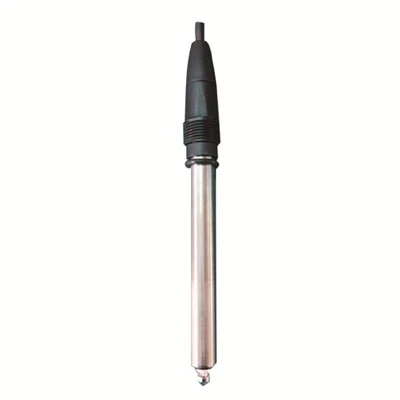
At the end of the day, a digital ORP probe is a piece of equipment that has to be reliable, easy to maintain, and accurate enough to protect your process. Whether you’re running a swimming pool, treating industrial wastewater, managing an aquaculture farm, or producing food and beverages where disinfection is non-negotiable, the probe you choose matters. If you’re tired of probes that drift, require constant replacement, or give you readings that don’t align with what’s actually happening in your water, we can help. Our team works with engineers and maintenance managers every day to match the right ORP probe to your specific application, whether you need a portable unit for testing, a heavy-duty probe for harsh industrial environments, or a model with remote monitoring capabilities. We’re not just a supplier—we’re the people who build these probes, so we can answer your questions about calibration, maintenance, and troubleshooting, no generic customer service scripts. If you’re ready to talk about how our digital ORP probes can take the guesswork out of your water quality management, reach out to our team to schedule a demo and discuss your procurement needs.
Oil in Water Sensor References
- “Principles of Oxidation-Reduction Potential (ORP) Measurement,” Honeywell Process Solutions, 2021.
- “Digital vs. Analog ORP Probes: A Practical Comparison,” Yokogawa Electric Corporation, 2020.
- “ORP Electrode Design and Performance in Wastewater Applications,” Water Environment Federation, 2019.
- “Temperature Compensation for Electrochemical Sensors,” Analytical Chemistry, vol. 92, no. 12, 2020, pp. 8123–8130.
- “Biofouling Control for Online Water Quality Sensors,” Journal of Water Process Engineering, vol. 35, 2020, p. 101247.
Shanghai Multiweal Environmental Technology Co., Ltd.
As one of the most professional orp probe manufacturers in China, we’re featured by quality products and low price. Please rest assured to buy discount orp probe in stock here from our factory. Contact us for custom service and OEM&ODM service.
Address: 5-2, Lane 801, Qiangye Road, Sheshan Town, Songjiang District, Shanghai
E-mail: sb.xi@shmultiweal.com
WebSite: https://www.multiweal.com/
