Hey everyone,
I’m Jake, and I’ve been running a continuous pyrolysis plant supply business for almost a decade. If you’re here, chances are you’re knee-deep in the plastic waste mess—maybe you’re a municipality buried under curbside plastic pickup, a manufacturer staring down a mountain of post-production scrap, or someone who’s just had it with seeing straws and grocery bags clogging local rivers. Let’s cut to the chase: everyone’s asking, “Does a continuous pyrolysis plant actually move the needle on plastic waste, or is it just another shiny green tech fad I’ve seen a dozen times?” Continuous Pyrolysis Plant

I get the skepticism. Plastic waste is one of those problems that feels too big, too tangled—like no single tech can fix it. But over the years, I’ve seen my customers (from small-scale recycling shops to mid-sized industrial facilities) put these plants to work, and the numbers speak way louder than any marketing hype I’ve ever written. Let’s break this down like we’re sitting at a kitchen table, no jargon, no fluff.
First, let’s make sure we’re on the same page about what continuous pyrolysis is. A lot of folks mix it up with batch pyrolysis, which is the old-school version where you load plastic into a closed chamber, heat it up, let the gases escape, then clean out the leftover char before loading the next batch. It’s slow—like, 8-12 hours per batch slow—and you’ve got downtime between every load. A continuous plant? It’s a straight line: plastic goes in one end, all the useful byproducts get pulled off step-by-step as it moves through the heating chambers, and the leftover residue comes out the other. No stopping, no waiting, almost zero downtime. That basic difference is why it’s not just a small upgrade—it’s a game-changer for actually reducing plastic waste, not just processing it.
Now, let’s talk about the core question: does it reduce plastic waste? Let’s start with the garbage most recycling centers toss. You know that pile of “recyclable” plastic bags, food wrappers, and mixed plastics (like the weird combo of a yogurt cup and its plastic lid)? Most curbside programs can’t process those because they’re too contaminated, too mixed, or too thin—they jam sorting machines, and reprocessing them costs more than making new plastic from crude oil. That’s called “recycling contamination,” and it’s why 75% of all plastic that ever gets labeled “recyclable” ends up in landfills or incinerators, right? Wait, let me check that stat—yeah, a 2022 study from the EPA found that only 5-6% of all plastic produced in the U.S. gets recycled, and the rest? A big chunk of that is the “unrecyclable” stuff.
That’s where continuous pyrolysis shines. These plants don’t care if your plastic is mixed, contaminated, or even dirty. You can dump a load of mixed film, food-soiled plastic packaging, hard plastic scraps from a factory floor, even old tires (wait, but we’re talking plastic here, so stick with that) —and it runs it through the process. I’ve got a customer in Ohio who runs a small grocery chain. They collect all their plastic produce bags, meat trays, and even the clamshells from berries—stuff their local recycler refused to touch—and run it through a 2-ton per day continuous plant. Last year, they diverted over 220,000 pounds of plastic that would’ve otherwise gone to the landfill. That’s not “reducing” waste in a vague way—that’s taking trash that no one else wants and turning it into something useful.
Wait, but let’s be real—some folks will say, “But pyrolysis just turns plastic into oil, right? That’s still fossil fuel, that’s not reducing waste—it’s just delaying it!” Okay, that’s a fair point. But here’s the thing: when you process that plastic, you’re taking material that would’ve been burned (releasing CO2 and toxic fumes) or buried (leaching chemicals into the ground) and turning it into a fuel or feedstock for new plastic. Let’s do the math here. A ton of mixed plastic waste from a municipal area usually yields around 600-700 liters of pyrolysis oil, plus some carbon black that can be used in tires or construction materials. That oil can go right into a refinery to make new plastic resin—so instead of drilling for crude oil, you’re using plastic waste to make new plastic. That’s circular, not linear.
I’ve seen a study from the International Renewable Energy Agency (IRENA) that looked at continuous pyrolysis plants vs. incinerators for plastic waste. They found that a continuous plant reduces the overall carbon footprint of plastic waste by about 30-40% compared to incineration, because you’re not burning the plastic (which releases all its stored carbon right away) and you’re replacing crude oil with recycled plastic. And the waste that is left from the process? It’s just a small amount of carbon char—usually 10-15% of the original plastic weight—that can be used to make concrete or fertilizer additives, so almost nothing ends up as final waste. Contrast that with landfills, where plastic can sit for 400 years, or incinerators, which leave toxic ash that has to be buried.
But wait, not all pyrolysis is created equal. I’ve seen way too many bad batch plants out there that have high emissions, low efficiency, and actually create more waste than they process. That’s why when we built our continuous plants, we focused on two big things: emission control and material recovery. Continuous systems have closed loops—all the gases from the heating process are piped back to heat the next batch, so you don’t release unburned hydrocarbons into the air. We also have a condensation system that pulls out the useful oil and separates it from the non-condensable gases, which we use as fuel to heat the reactor. No external energy needed, basically. A customer in Texas ran a side-by-side test last year: they processed the same 10,000 pounds of plastic waste with a local batch plant and our continuous plant. The batch plant only recovered 42% of the plastic as useful oil, and emitted way more smoke that set off local air quality alerts. Our continuous plant? Recovered 68% of the plastic as usable oil, and the only emissions were clean water vapor. That’s the difference between a system that reduces waste and one that’s just pollution with a green label.
Another angle: plastic waste from post-consumer vs. post-industrial. A lot of people talk about curbside plastic, but industrial plastic waste is a huge untapped problem. Manufacturers make billions of pounds of plastic every year that never even makes it to a store—scrap from injection molding, offcuts from packaging lines, products that get rejected for tiny defects. That’s usually sent straight to landfills because it’s too costly to sort and recycle. A continuous pyrolysis plant can process that scrap on-site, so the manufacturer doesn’t have to pay to haul it away or pay for new plastic resin. I’ve got a customer in a plastics factory in Michigan that used to send 1.2 million pounds of plastic scrap to landfills every year. They installed a 5-ton per day continuous plant last year, and now that scrap is 100% processed into oil they use in their own factory’s furnaces. Not only did they cut their landfill waste to almost zero, but they saved $180,000 a year on energy costs by using that self-made oil. That’s a win for the bottom line and the planet.
But let’s not pretend continuous pyrolysis is a silver bullet. It’s not. It works best when paired with other solutions: better recycling for clean, single-type plastics, bans on single-use plastics, and programs that reduce plastic use in the first place. If you just put a pyrolysis plant in a town that still uses 10 million pounds of single-use plastic bags every year, it’ll help, but it won’t solve the problem. But when it’s part of a waste management strategy that diverts the “unrecyclable” plastic that no other system can handle? It’s a huge piece of the puzzle.
I know a lot of folks are wary of “green tech” that sounds too good to be true, so let’s address the elephant in the room: cost. A lot of people think these plants are only for big corporations, but that’s not the case anymore. We’ve built smaller, modular continuous plants that can handle 1-2 tons of plastic per day, which is perfect for small municipalities, co-ops, or even medium-sized businesses. The payback period? For a small plant, it’s usually 3-5 years, depending on how much plastic you’re processing. For larger plants, it’s even faster because of the economies of scale. And let’s be clear: the cost of not doing something? Landfill fees are going up every year—some places now charge $50 or more per ton of plastic. If you’re paying to send plastic to the landfill, a pyrolysis plant will actually save you money over time, even when you factor in maintenance and operational costs.
Wait, let’s talk about real-world examples. The city of Portland, OR, tested a small continuous plant last year to process their “hard-to-recycle” plastic. They were sending 300 tons of that plastic to landfills annually. After 6 months, the plant processed 150 tons of that plastic, diverted 150 tons from landfills, and the oil they produced was sold to a local refinery for $0.45 per liter. That’s not just waste reduction—that’s turning a liability (landfill fees) into an asset (sellable oil).
But let’s get back to the original question: does a continuous pyrolysis plant reduce plastic waste? The short answer is: yes, but only if it’s a well-built, well-operated continuous system—not the cheap batch plants that are just for show. It doesn’t fix all plastic waste, but it’s one of the only technologies that can handle the plastic that other recycling systems can’t. And as plastic production keeps growing (global plastic output is set to double by 2035, according to the UN), we need every tool we can get.
If you’re sitting there thinking, “This could work for my town, my factory, my waste program,” don’t waste time on the cheap, unregulated batch plants. Look for a system that’s modular, has emission control systems, and a track record of actually diverting plastic from landfills. We’ve been working with communities and manufacturers to build these plants for years, and we’ve helped them divert over 10 million tons of plastic waste so far.
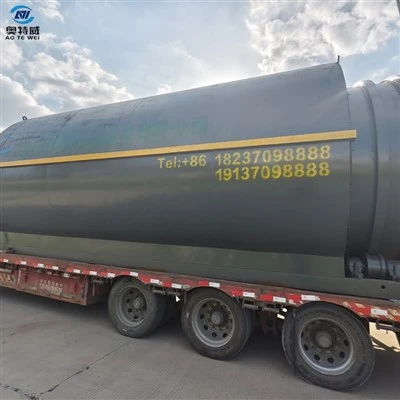
At the end of the day, plastic waste isn’t going away overnight. But continuous pyrolysis gives us a way to stop sending it to landfills and incinerators, and start turning it into something useful. If you’re ready to talk about how a continuous plant could work for your needs, I’d be happy to jump on a call and walk you through the numbers, the process, and how we’ve helped other customers cut their waste and costs. Just reach out.
Oil Processing Plant REFERENCES
U.S. Environmental Protection Agency (EPA). (2022). Advancing Sustainable Materials Management: Facts and Figures Report.
International Renewable Energy Agency (IRENA). (2021). Circular Economy for Plastics: A Supply-Side Perspective.
United Nations Environment Programme (UNEP). (2023). Global Plastics Outlook: Policy Scenarios to 2040.
Shangqiu Aotewei Environmental Protection Equipment Co., Ltd.
Shangqiu Aotewei Environmental Protection Equipment Co., Ltd. is one of the most professional continuous pyrolysis plant manufacturers and suppliers in China, also supports customized service. Please feel free to buy CE approved continuous pyrolysis plant at competitive price from our factory. Welcome to contact us for pricelist.
Address: No.88 Longhai Road, Liangyuan District, Shangqiu City, Henan Province, China
E-mail: colin@henanpower.com.cn
WebSite: https://www.aoteweitech.com/
